
PROPAGANDA POSTCARDS
(1924)
This page was last updated
16-Sep-2026 04:37
DEUTSCHER FLIEGER-GEDENKTAG NÜRNBERG-FÜRTH
GERMANY AVIATOR COMMEMORATION DAY
(12th/13th Jul 1924)
BACKGROUND: This postcard was published to commemorate a Germany aviator commemoration day held on 12th and 13th Jul 1924 in Nürnberg.
SONDERSTEMPEL: A special handstamp commemorating the event was used inscribed "DEUTSCHER FLIEGERGEDENKTAG| NÜRNBERG", which can be seen on the example below
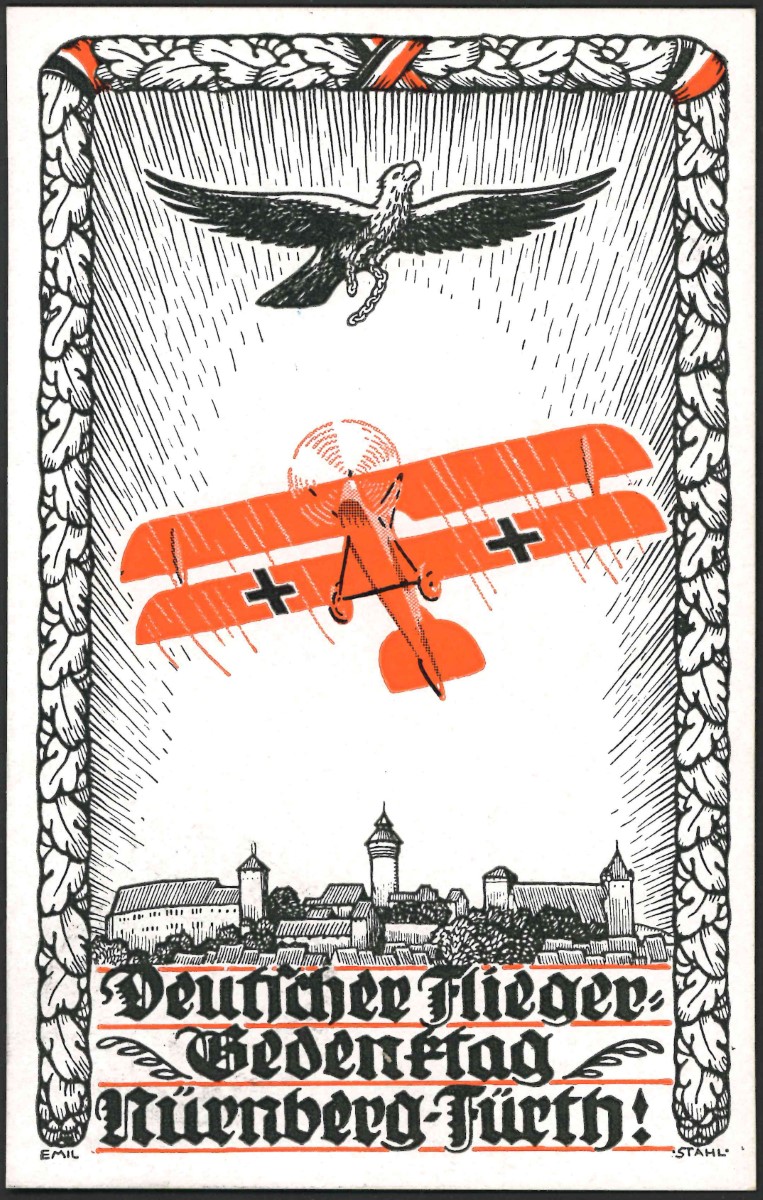
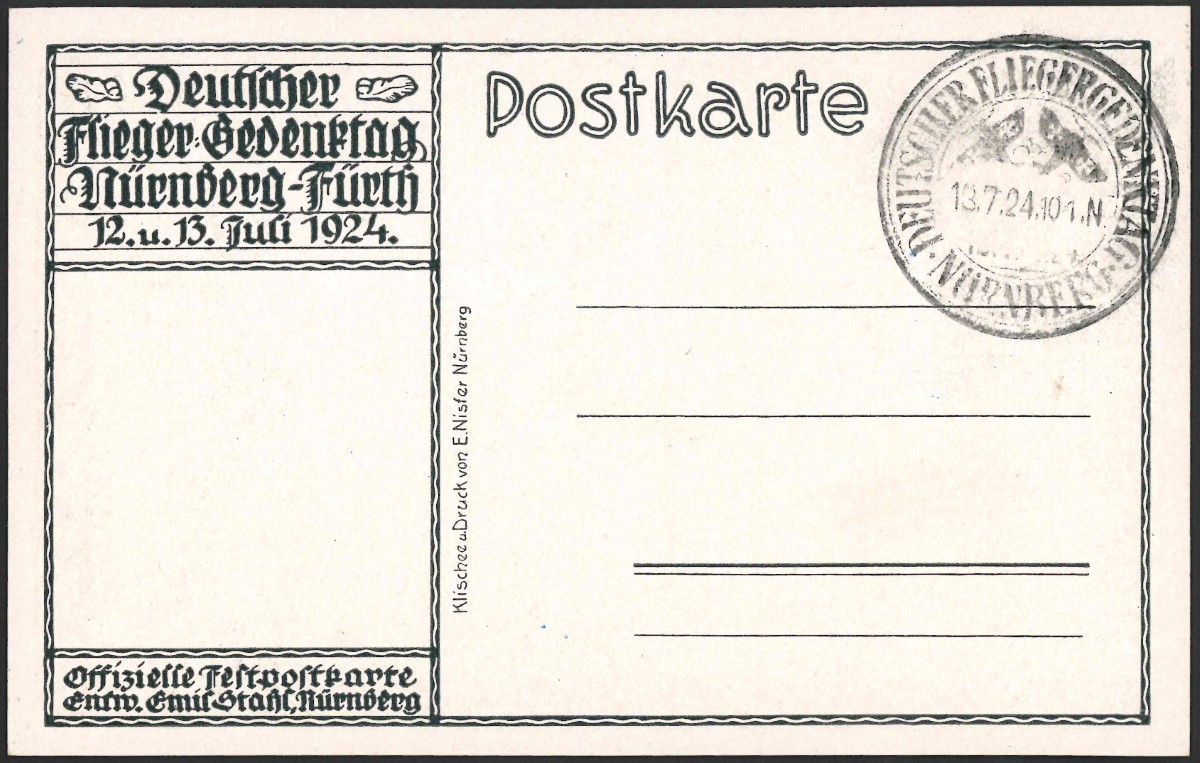

Published to commemorate a German Aviators' Memorial Day (Deutscher Flieger-Gedenktag) event held in Nuremberg-Fürth on 12–13 July 1924.
Front: A striking Art Deco/Expressionist design by Nuremberg artist Emil Stahl (signature split "EMIL / STAHL" at the bottom corners, matching the credit on the back, "Entw. Emil Stahl, Nürnberg"). An eagle trailing a broken chain flies above a red/orange WWI-style biplane fighter marked with German military Iron Crosses, diving toward the Nuremberg skyline (the towers of the Kaiserburg, Nuremberg Castle, are recognizable at the bottom).
The chained-but-breaking-free eagle is a pointed piece of symbolism: the 1919 Treaty of Versailles had banned Germany from having a military air force, so imagery like this, WWI combat planes, fallen aviators, an eagle straining against its chain, carried a clear undertone of nationalist grievance and aspiration to rebuild German military aviation, layered on top of genuine mourning for WWI pilots. One dealer description of this exact card even notes the plane evokes the "Red Baron" (Manfred von Richthofen), Germany's most famous WWI fighter ace.
Back: Printed "Deutscher Flieger-Gedenktag Nürnberg-Fürth, 12. u. 13. Juli 1924 | Offizielle Festpostkarte, Entw. Emil Stahl, Nürnberg,", printed by E. Nister (or similar), Nuremberg. It's cancelled with a matching special event postmark reading "Deutscher Fliegergedenktag| Nürnberg," dated 13.7.24.
The event itself was tied to the Fürth-Atzenhof airfield near Nuremberg, one of the region's early aviation sites, and fits into a broader pattern of Weimar-era "Flieger" commemorations and gliding/aviation days that kept German flying culture and aviation enthusiasm alive during the years military aircraft were prohibited, groundwork that fed directly into the aviation clubs and glider programs later absorbed into Luftwaffe rearmament in the 1930s.
Source: Fuerthwiki.de
