
PROPAGANDA POSTCARDS
(1934)
This page was last updated
16-Sep-2026 05:27
WIR GEWINNEN DIE ARBEITSCHLACHT
WE ARE WINNING THE BATTLE FOR JOBS
(Apr 1934)
This is a Nazi propaganda postcard tied to the regime's "Battle for Work" (Arbeitsschlacht) employment campaign of the early Third Reich.
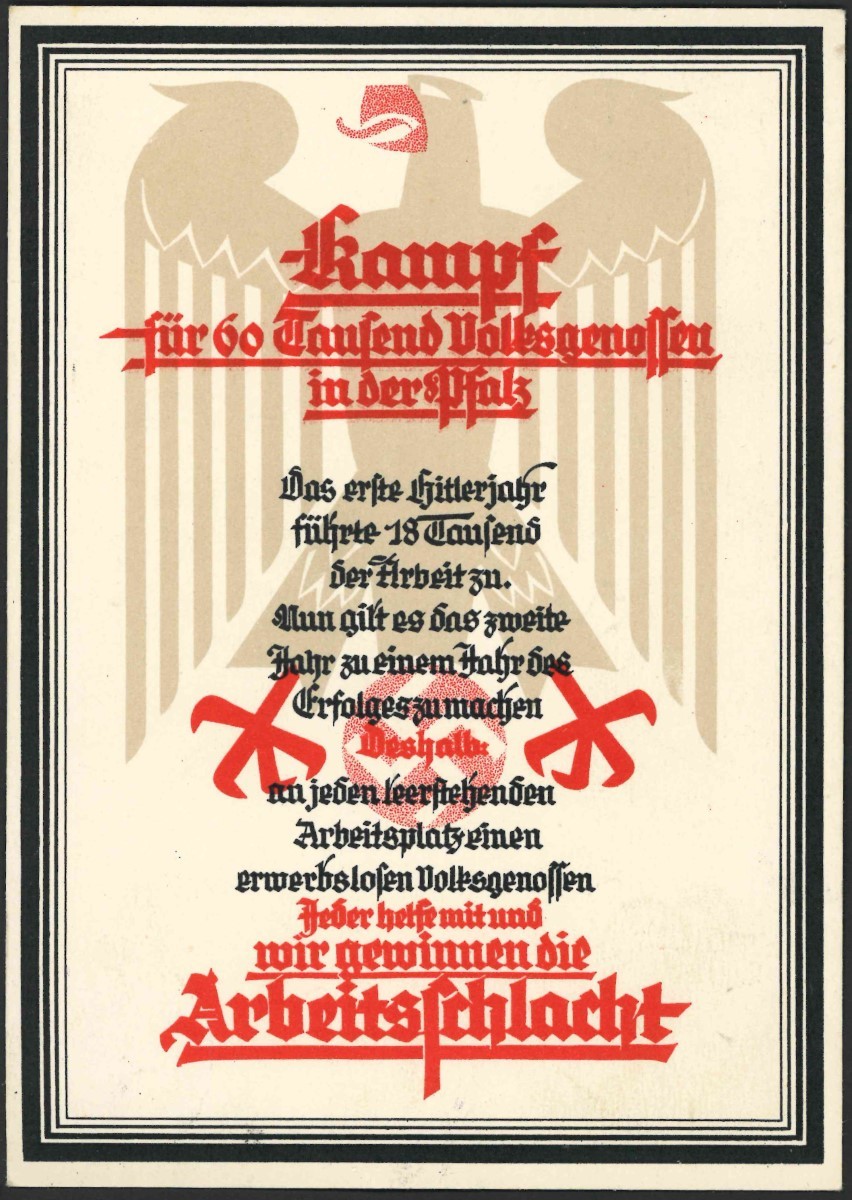

The front side is dominated by a large stylized eagle (the Nazi state emblem). The red Fraktur/blackletter headline reads roughly: "Kampf für 60 Tausend Volksgenossen in der Pfalz" ("Battle for 60,000 Fellow Germans in the Palatinate"). The body text states:
The first Hitler year brought 18,000 people back into work, and calls on citizens to make the second year an even greater success, urging that every vacant job go to an unemployed "Volksgenosse" (racial/national comrade), ending with "wir gewinnen die Arbeitsschlacht" ("we will win the battle for work"). This was a real propaganda push: the regime framed unemployment reduction as a military-style "battle" to build public support in its early months.
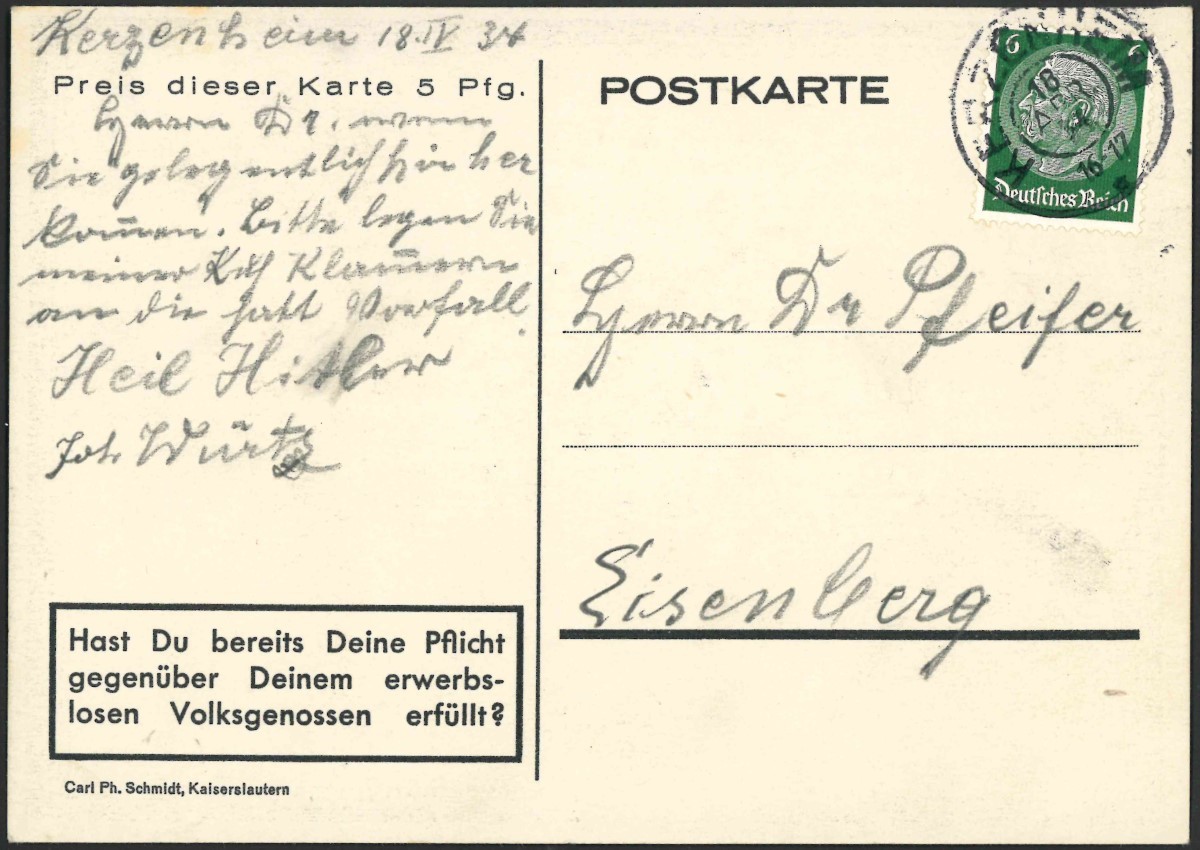
Back side: A standard postcard layout with a printed boxed slogan:
"Hast Du bereits Deine Pflicht gegenüber Deinem erwerbslosen Volksgenossen erfüllt?", ("Have you already fulfilled your duty toward your unemployed fellow German?"), reinforcing the same jobs campaign. It's postmarked from Kerzenheim (a town in the Palatinate/Pfalz region, matching the front's regional reference) on 18th Apr 1934 and is addressed to a "Herr Dr. Pfeifer" in Eisenberg. The handwritten note is signed "Heil Hitler", a common closing formula of the period. The printer credit at bottom left reads "Carl Ph. Schmidt, Kaiserslautern," a local Palatinate printing house. Price is marked as 5 Pfennig.
Historically, this places it squarely in the propaganda output of 1933–34, when the new government used postcards, posters, and rallies to publicize its unemployment-reduction programs (public works, labor service, etc.) as a signature early achievement, both a genuine policy emphasis and a key piece of regime legitimation messaging. Another card following a similar theme but aimed at farmers and the rural population was also used in Bavaria.
