
GERMAN PHILATELY
PROPAGANDA POSTCARDS
(1934)
This page was last updated
16-Sep-2026 05:27
TAG DER NATIONALEN ARBEIT
NATIONAL DAY of LABOUR
(1st May 1934)
BACKGROUND: Issued on 1st May 1934 to commemorate the National Day of Labour (Tag Der Nationalen Arbeit). The card was published by Zentralverlag der NSDAP Franz Eher in Munich. The example below cost €160
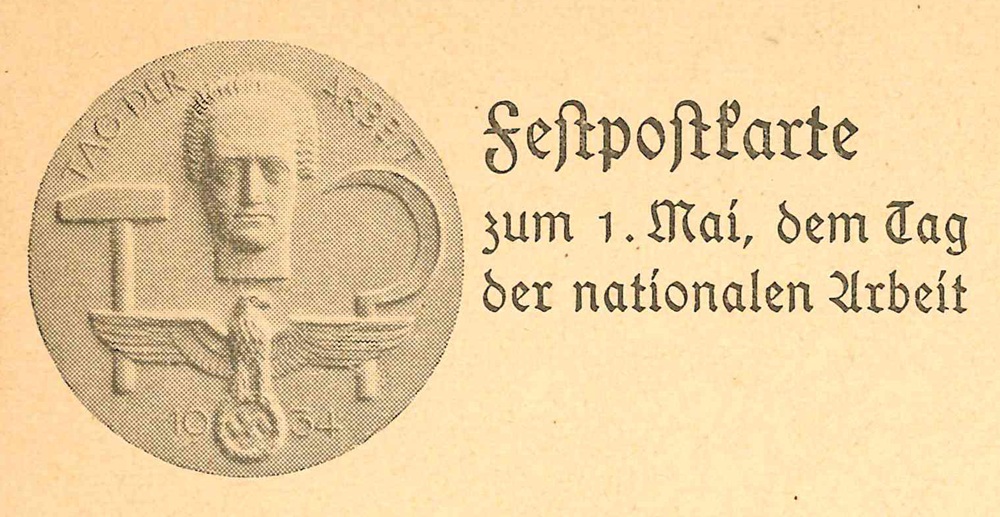
The title of the card consists of the inscription "Commemorative postcard for May 1st, the Day of National Labor"

The card was published by the "Zentralverlag der NSDAP. Frz. Eher", this was a Nazi owned publishing house which was a prolific source of Nazi propaganda material located in Munich
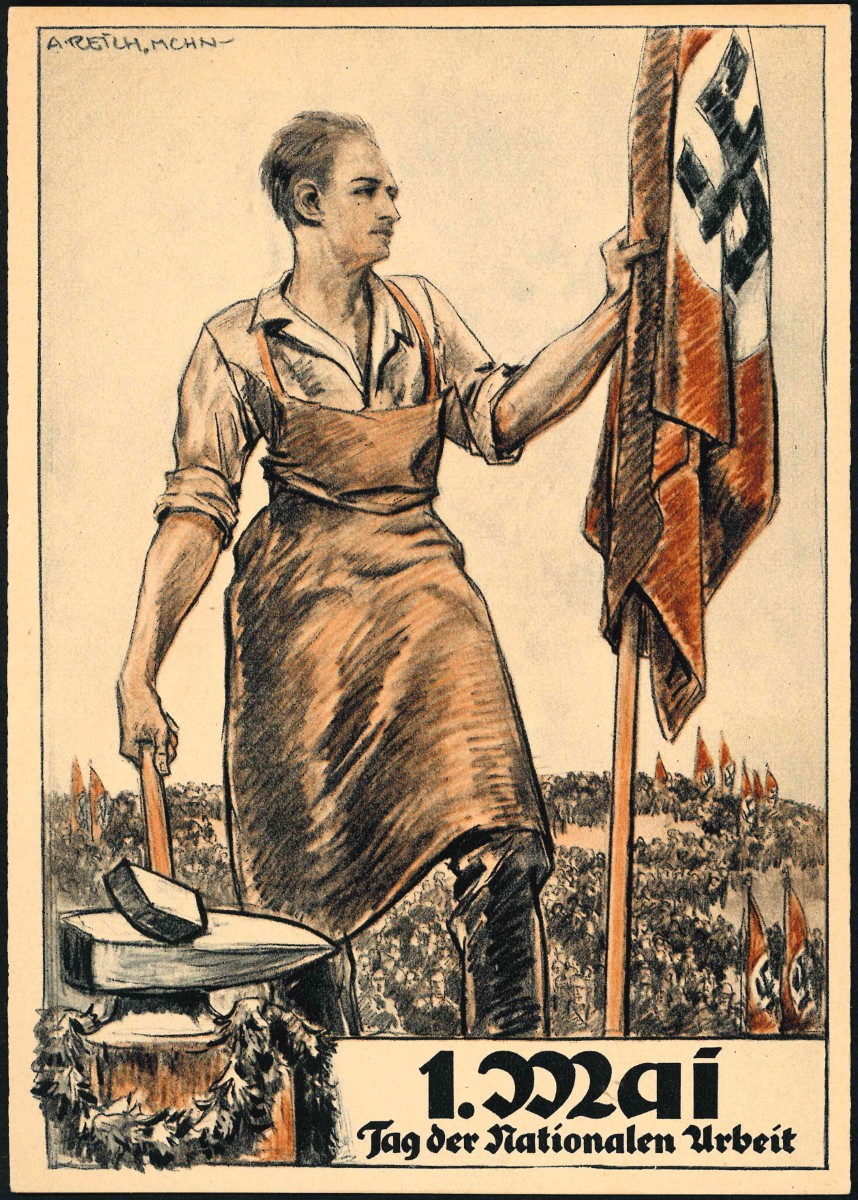
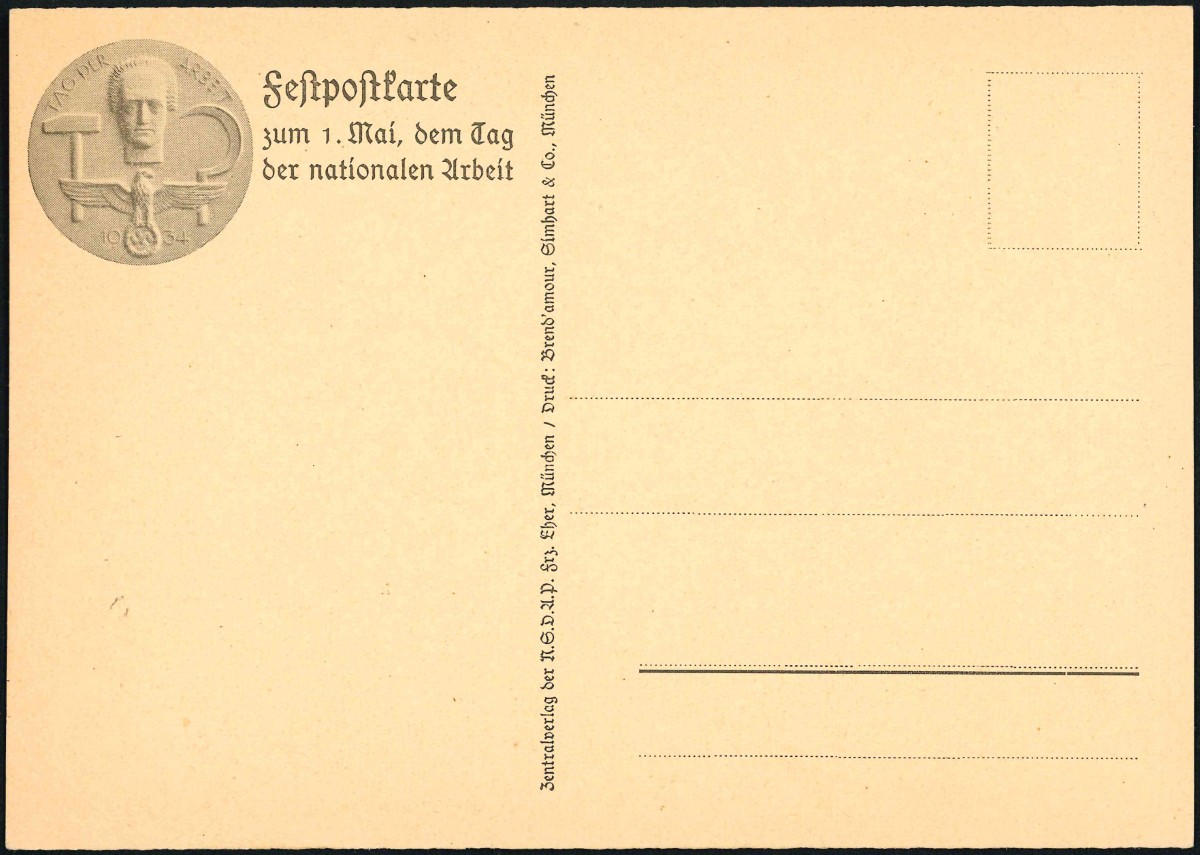

On 1st May 1934, Germany marked its second annual "Tag der nationalen Arbeit" (Day of National Labor) under Nazi rule, a holiday the regime had created in 1933 explicitly to co-opt and replace the traditional international socialist/workers' May Day.
The centerpiece event was a mass rally at Tempelhof Air Field in Berlin, where Hitler addressed the crowd alongside Hermann Göring, Joseph Goebbels, and Wilhelm Brückner. Hitler and Franz von Papen also appeared at the Lustgarten in Berlin that day. In his speech, Hitler promised his government would make "every effort" to reduce unemployment, declaring that the German people - "from their venerable president down to the worker and peasant" - were united in the wish "to become happy through work."
Context and significance: By 1934, this had become a highly cynical piece of political theater. The original 1st May 1933 celebration had been used as bait: the Nazis staged a huge, ostensibly pro-worker festival, then the very next day (2nd May 1933) sent the SA and police to storm and dissolve every independent trade union in Germany, arresting their leaders and folding workers into the new Nazi-controlled German Labour Front (DAF). By the time of the 1934 commemoration, that consolidation was complete - so the "Day of National Labor" now functioned purely as a propaganda spectacle celebrating the regime's supposed solidarity with workers, without any actual independent labor movement left to co-opt.
