PROPAGANDA POSTCARDS
(1938)
This page was last updated
16-Sep-2026 05:28

ANNEXATION OF THE SUDETENLAND
(1st Oct 1938)
There were a great number of postcards published to commemorate the return of the Sudetenland to Germany, below are just a few examples of the many that were printed.
ANNEXATION OF THE SUDETENLAND
(1st Oct 1938)
Issued in Asch, part of the Sudetenland, to commemorate the Nazi occupation of the City of Asch.
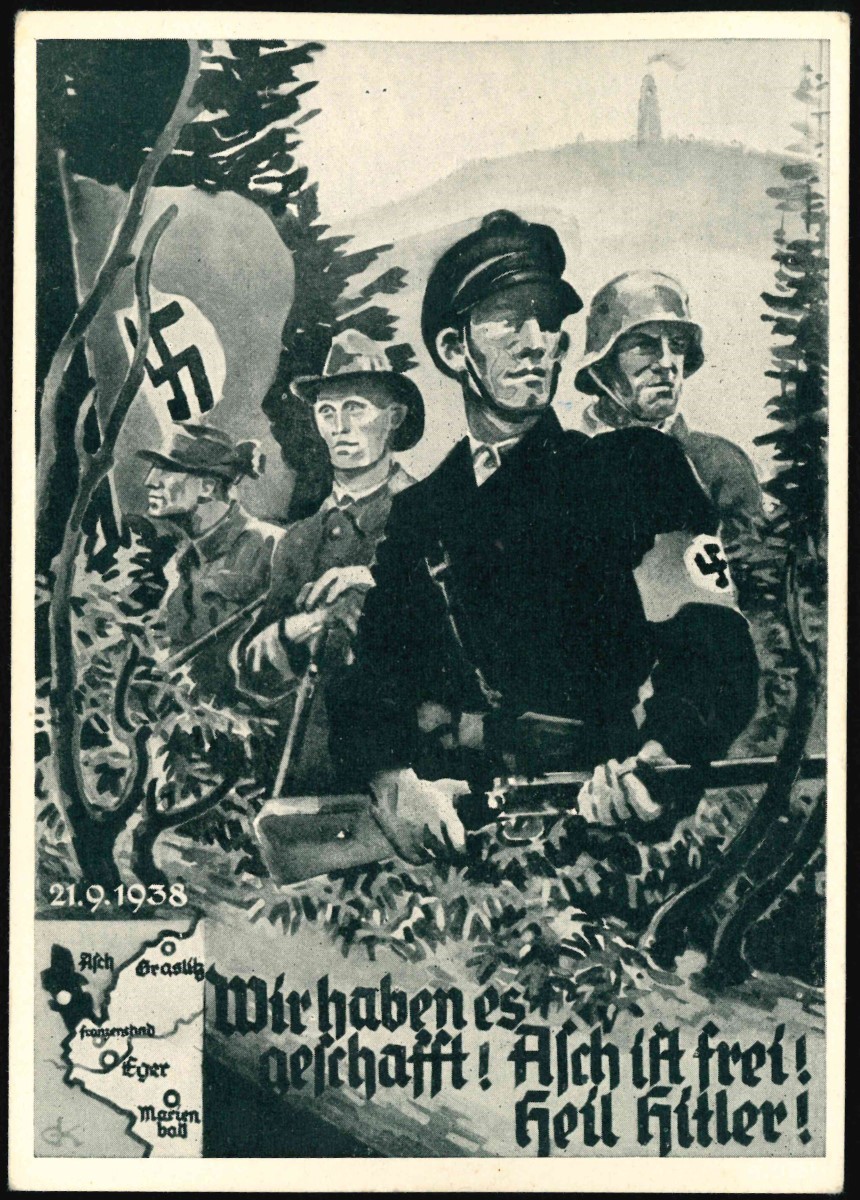


On the night of the 20th / 21st September 1938 a unit of Sudeten Freikorps, eager to stir up trouble on the German / Czechoslovakia border, crossed into the Asch panhandle and seized control of the German speaking border towns of Asch, Eger, Franzensbad and Rossbach. The card shown below was published to commemorate that event (hence the small map of the region and the date 21.9.1938 in the bottom lefthand corner).
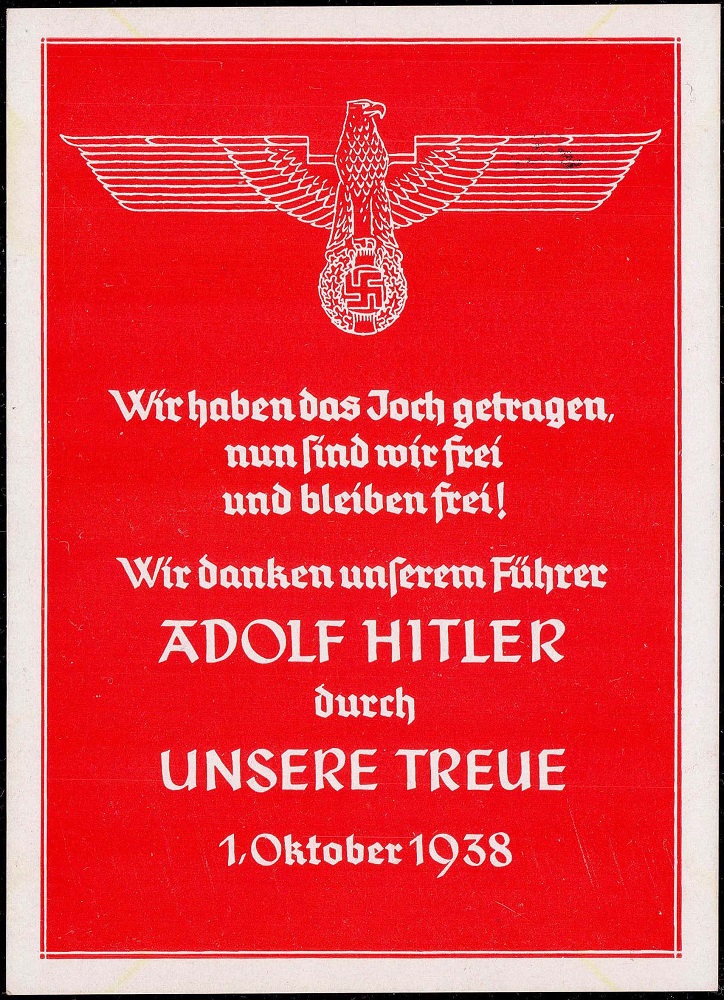
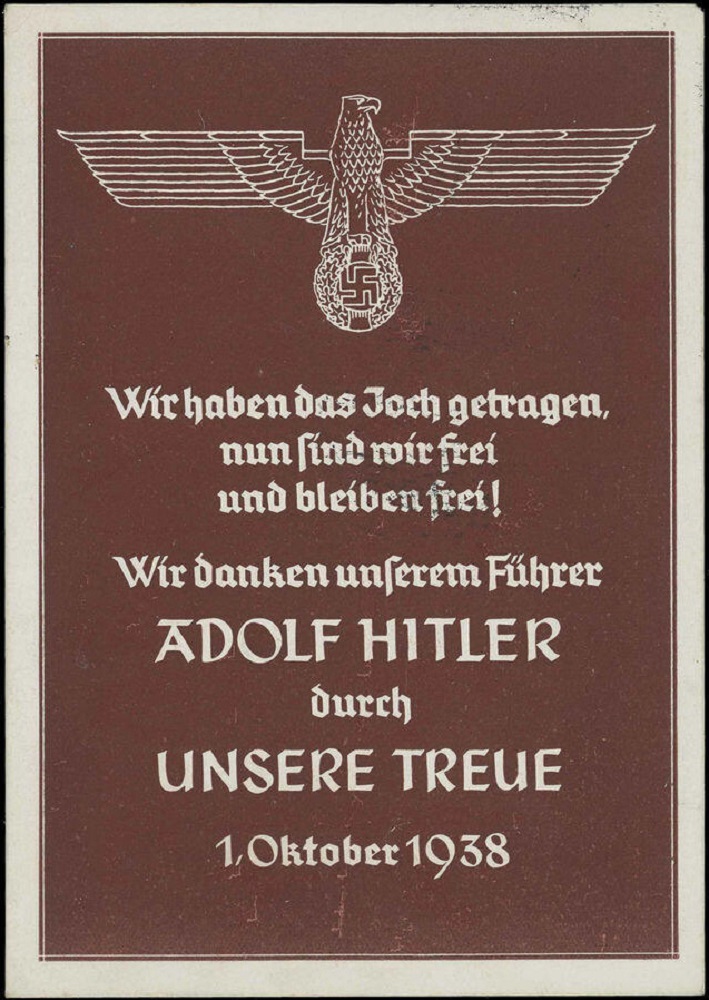
The example below, cancelled in Asch a week later, on 30th Sep 1938 features a circular cancellation inscribed with both the Czech and German names for the town "Asch" and "As". This example has a Czech 20h stamp overprinted 1.20h (12Rpf). In additon to the city cancel there is a large red Slogan cancel (or Liberation Cachet), which is inscribed "Wir haben das Joch getragen | nun sind wir frei und bleiben frei! | Postamt Asch 1 Uhr 21. September 1938" and translates as "We have borne the Yolk | But now we are Free and Will Remain | Free, Asch 1 post office, on 21st September 1938”.
This was a very common slogan which can also be found in a modified format with the eagle positioned slightly higher so that the text does not obscure the swastika as it does in the example below. This revised version was likely only used in Asch [REQUIRES CONFIRMATION]. There was yet another version of this cachet which has slightly shorter text. In addition, the revised format can be found with either "September" or a misspelt 'Semptember'.
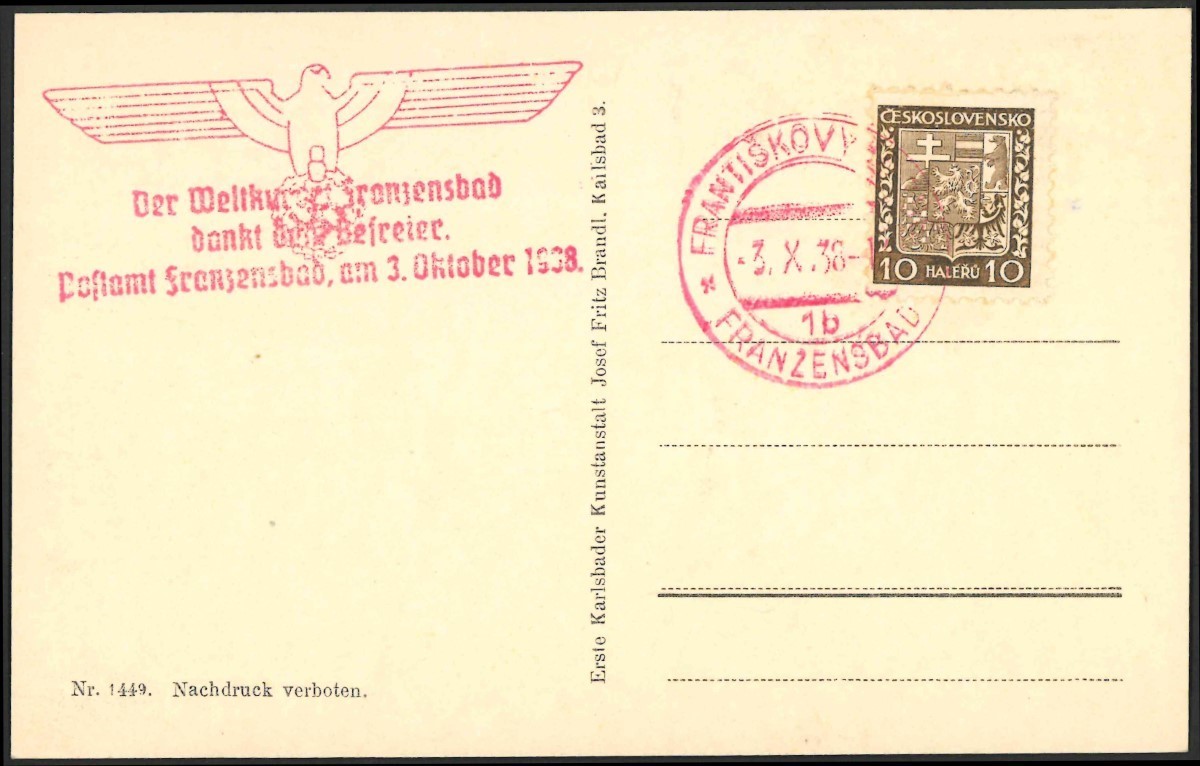
Franzensbad and Rossbach also had their own versions of the unmodified three line Liberation Cachet. The version from Franzensbad reads "Der Weltkurort Franzensbad | dankt dem befreier! | Postamt Franzenbad am 3. Oktober 1938” - 'The World Health Resort Franzenbad | thanks its liberator | Franzensbad Post Office 3rd October 1938'
FRANZENSBAD SPECIAL CACHET
The picture postcard below shows a view of Franzensbad and the reverse side has the special cachet used in that town on 3rd Oct 1938.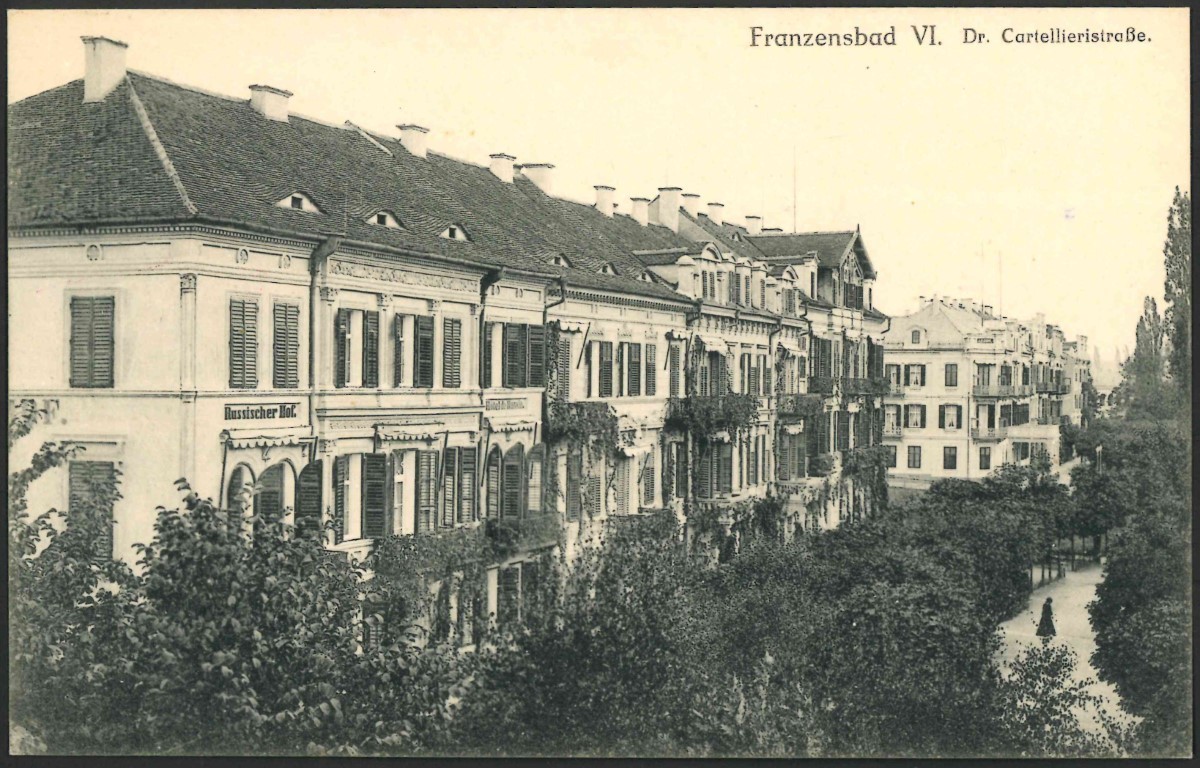
VERLAG OTTO HOPPE, BERLIN
(1st Oct 1938)
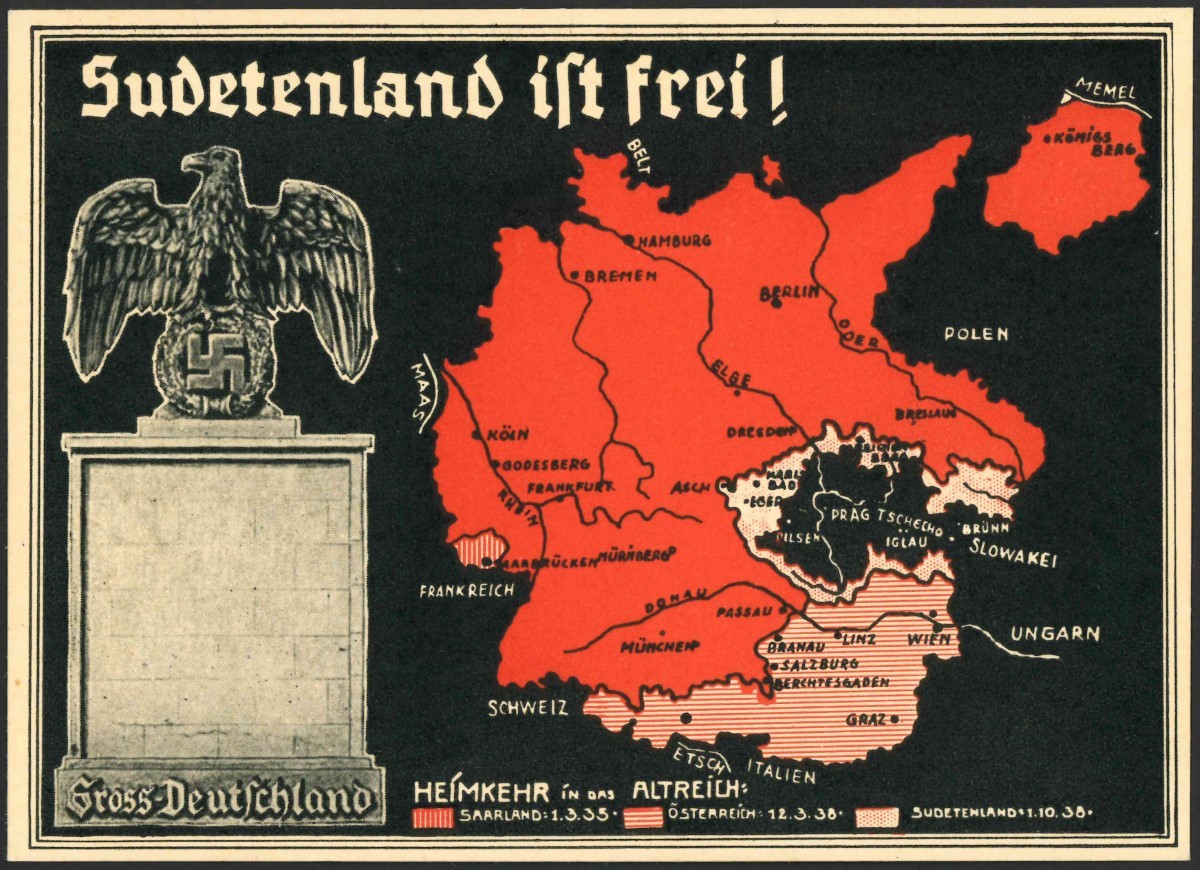
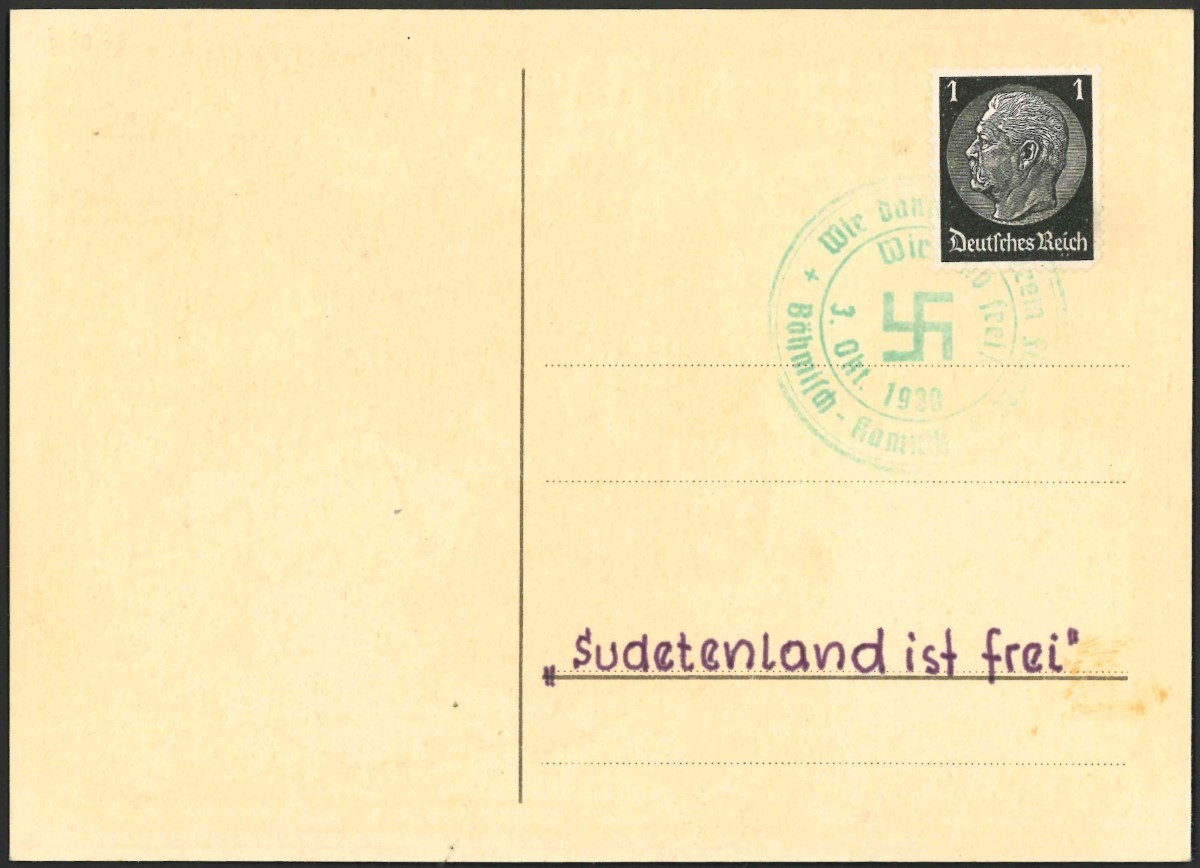
Issued 1st Oct 1938 to celebrate the return of the Sudetenland on 1st Oct 1938, Austria on 12th Mar 1938 and the Saarland on 1st Mar 1935 to Germany. There are three versions of this card, the first has no inscription on the base of the plinth, the second has "Gross Deutschland" on the base of the plinth and the third, which was printed in 1945, has a blue label added to the plinth inscribed 'DEUTSCHLAND VERDERRER 1945'. The example below is the second version.
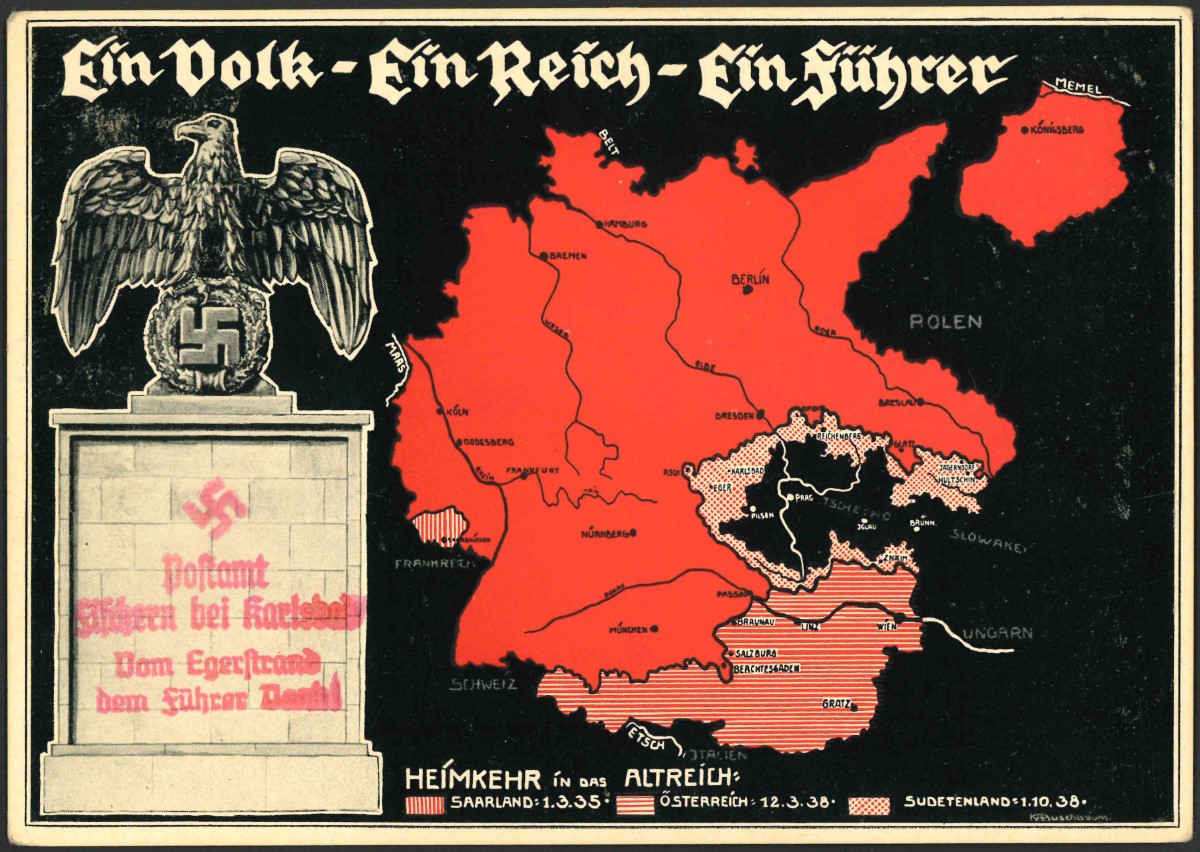
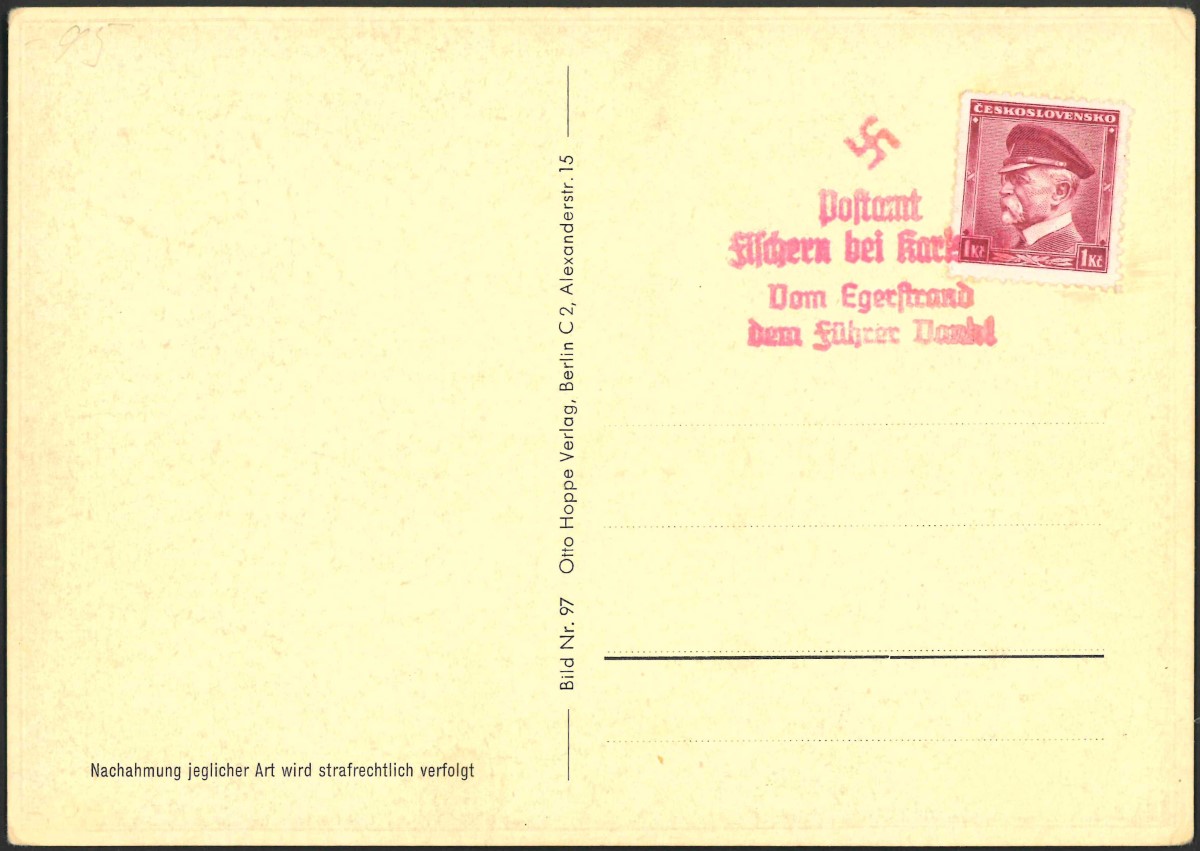
ABOVE: VERSION WITHOUT TEXT ON BASE OF PLINTH
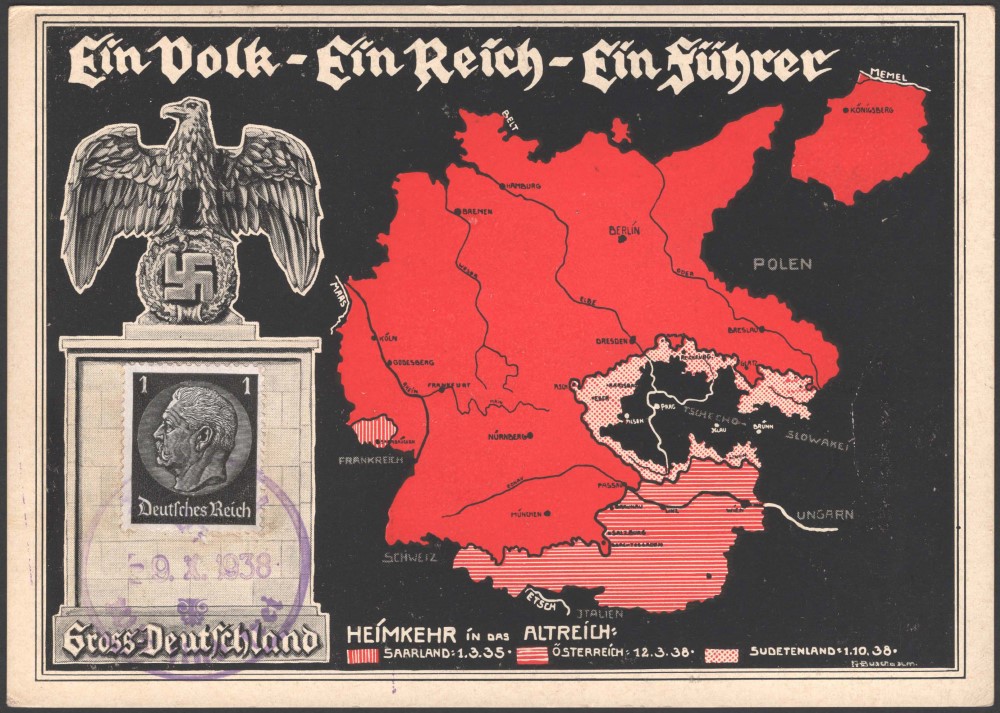
ABOVE: VERSION WITH TEXT ON BASE OF PLINTH
ABOVE: VERSION WITH BLUE LABEL ON BASE OF PLINTH
UNKNOWN PUBLISHER
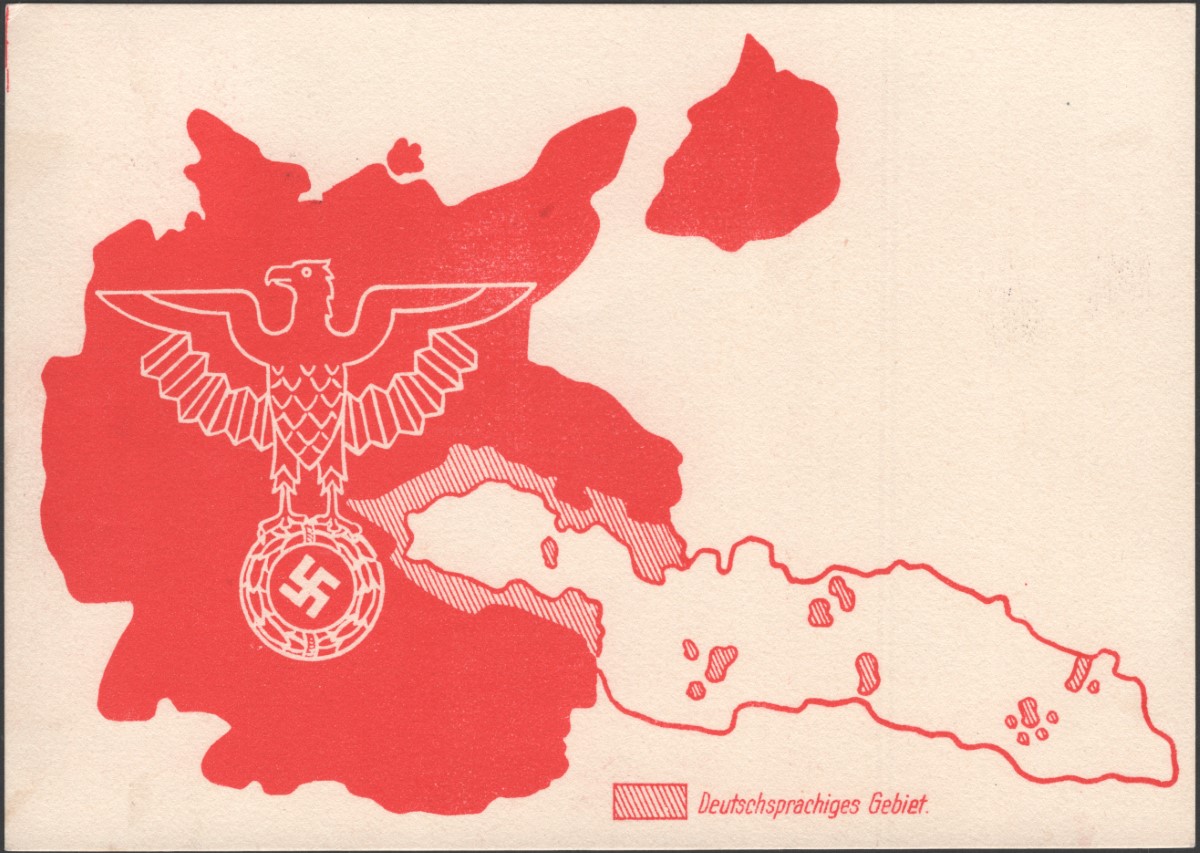
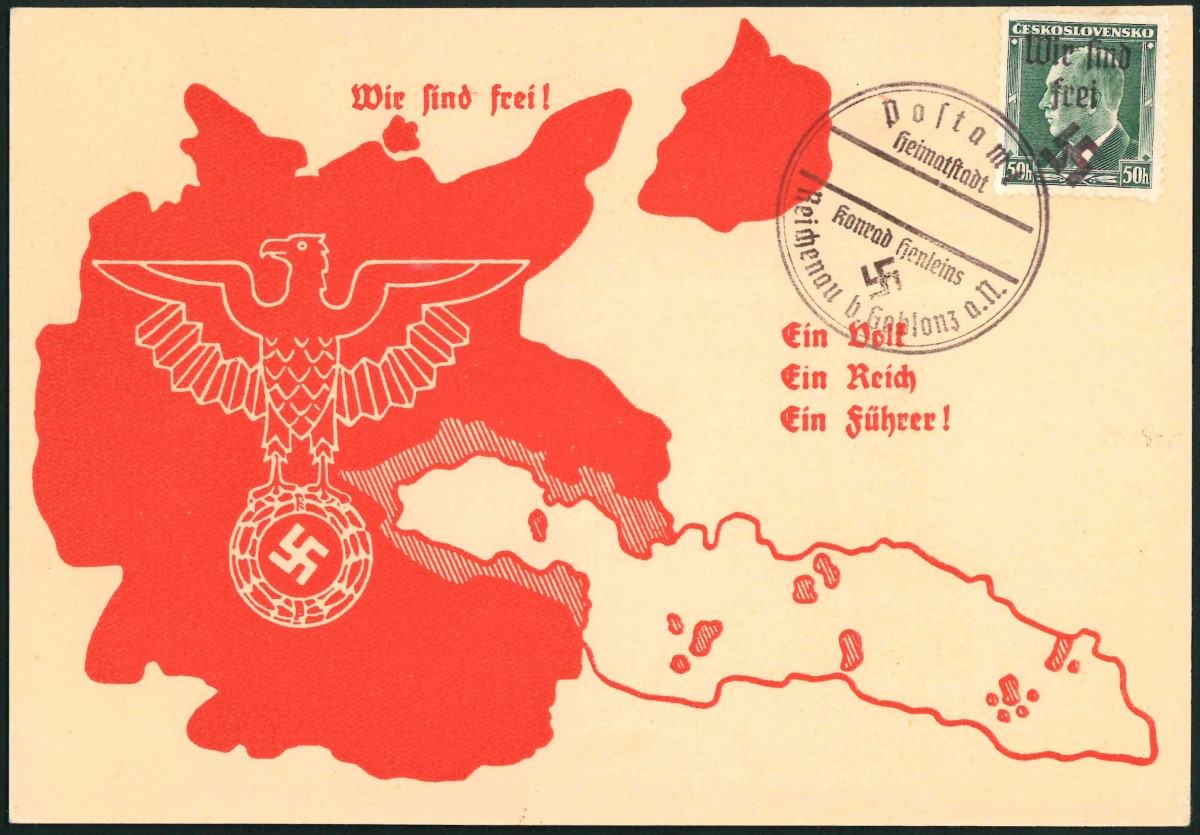
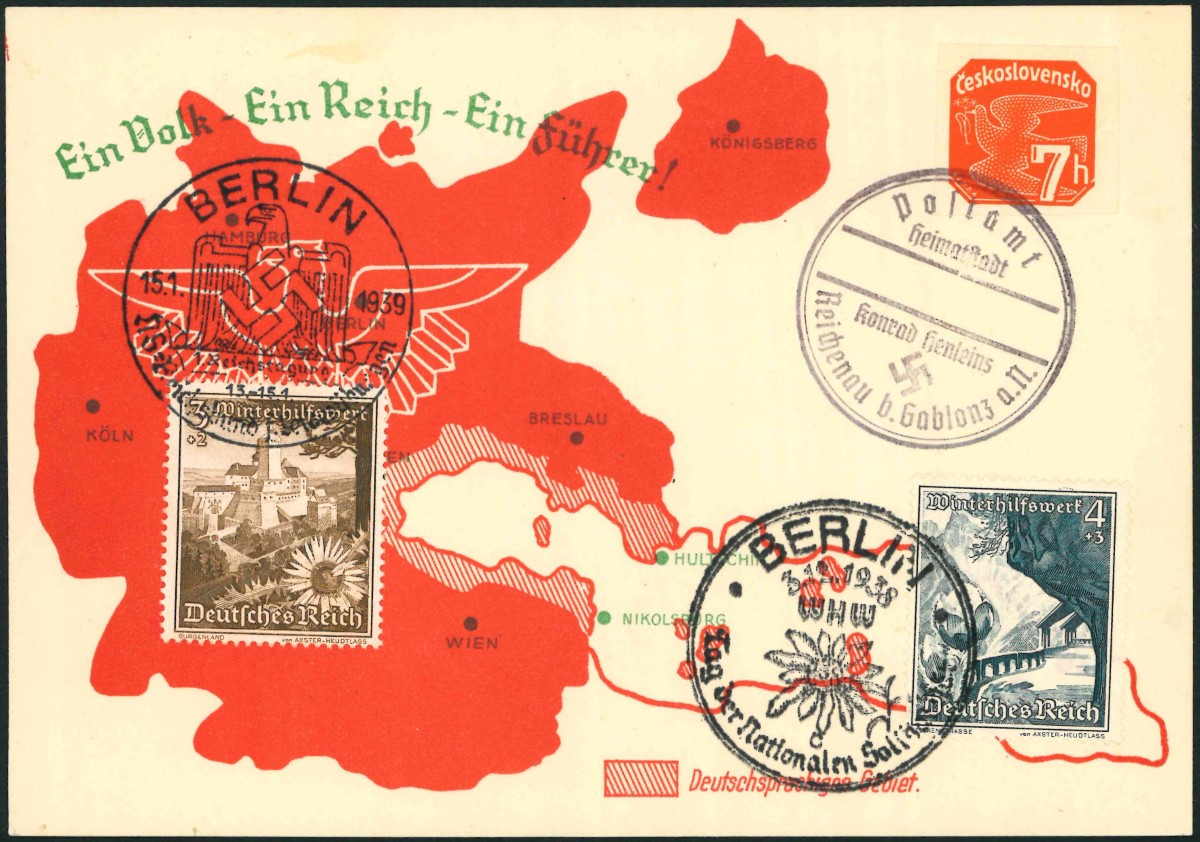
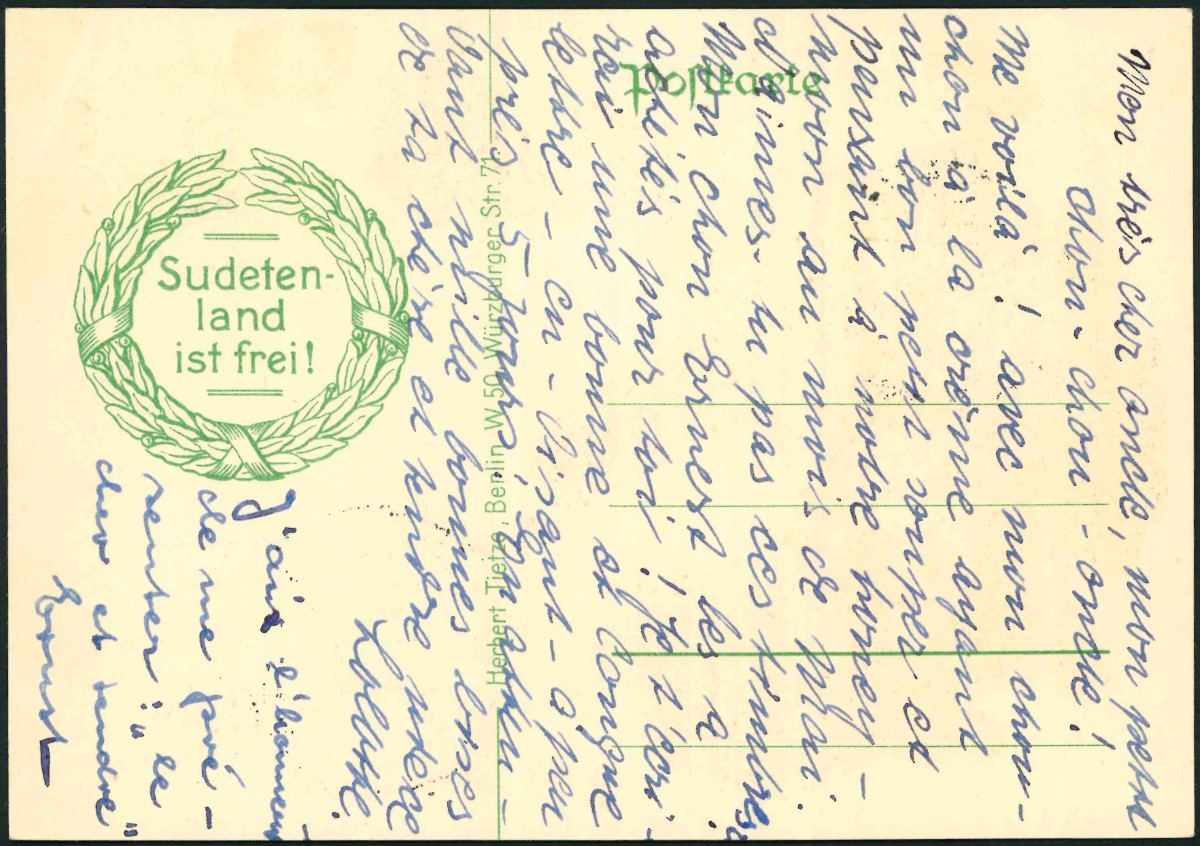
There are at least 3 almost identical cards from an unknown publisher that feature Germany in bold red with an outline of Czechoslovakia. The various regions in Czechoslovakia that have predominantly German speaking inhabitants has been highlighted leaving no doubt that the publisher considered these regions part of Germany itself.The version on the left does not have any text but the example on the right is inscribed "Wir Sind Frei!" - 'We are free!' and "Ein Volk | Ein Reich | Ein Fuhrer!" - 'One people | One Empire | One Leader!'

WERNER SCHÜLER
"DER SONDERSTEMPEL SPEZIALIST"
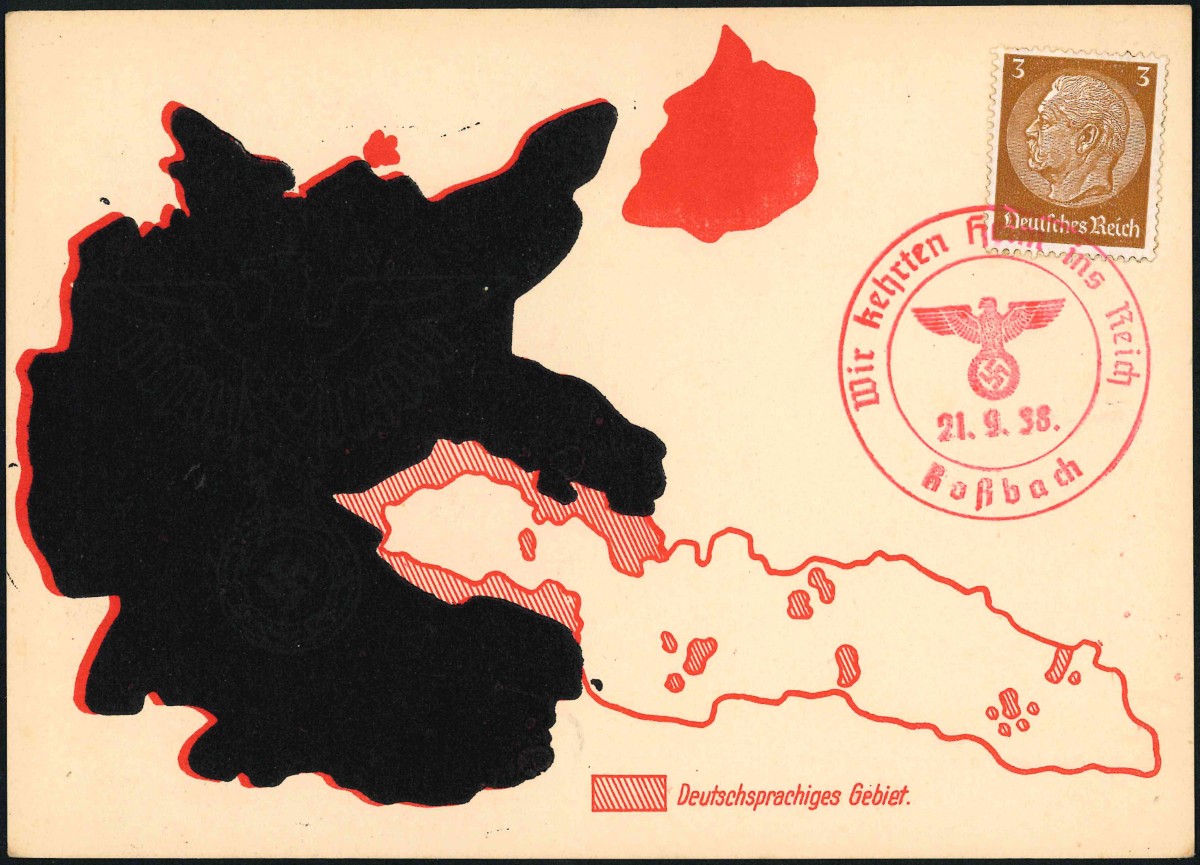
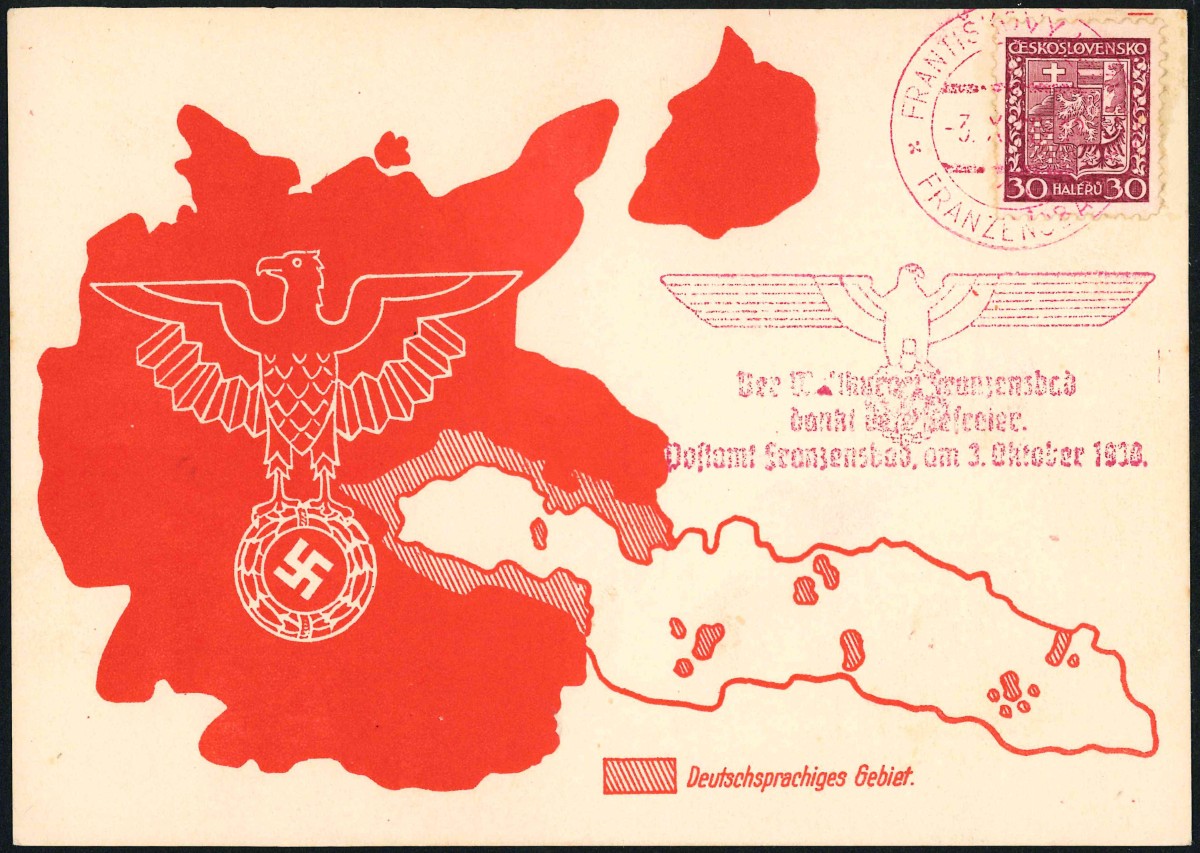
The following cards were published for Werner Schüler "Der Sonderstempel Spezialist" at Berlin W 15, Uhlandstr, 161
These two postcards use the same image of Germany and the Sudetenland, the first with Germany shaded black and the second without the shading but with a large white eagle holding a wreath and swastika. The first example features a special handstamp inscribed "Wir Kehrten heim ins Reich - Roßbach" - "We Returned Home to the Reich – Rossbach", dated 21st Sep 1938.
The second example is identical to another card, only this card has texts on the reverse side which do not appear on the other card. This example also features a 30 Halero Czechoslovakian stamp and special stamps used in Franzenbad on 3rd Oct 1938.
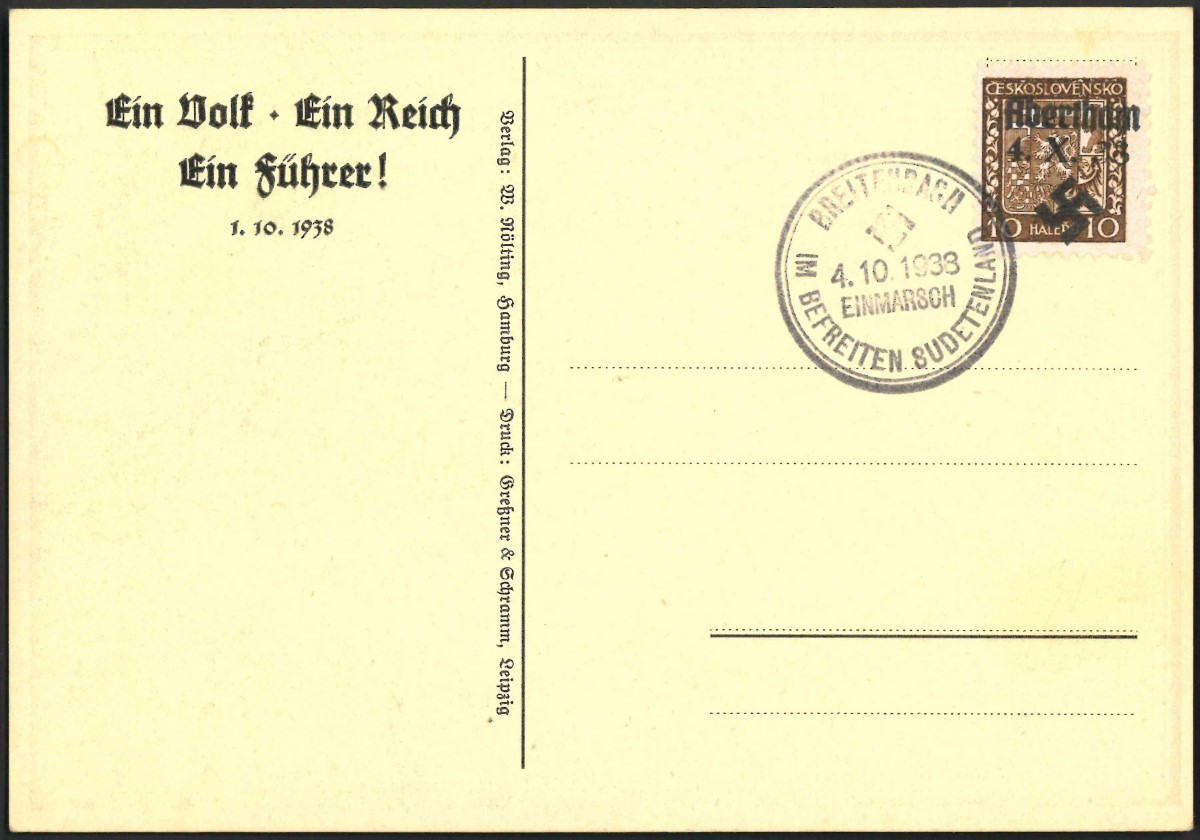
VERLAG W. NÖLTING HAMBURG
Issued by Verlag W. Nölting of Hamburg to commemorate the annexation.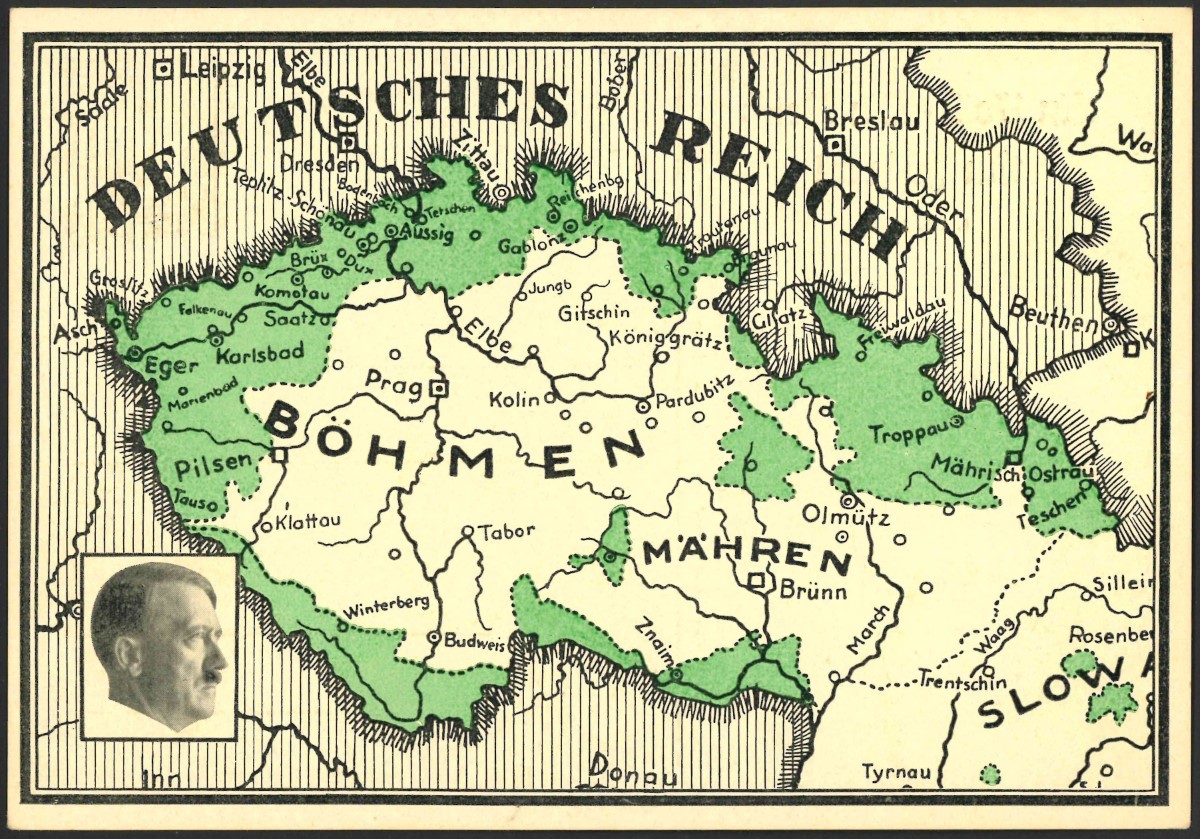
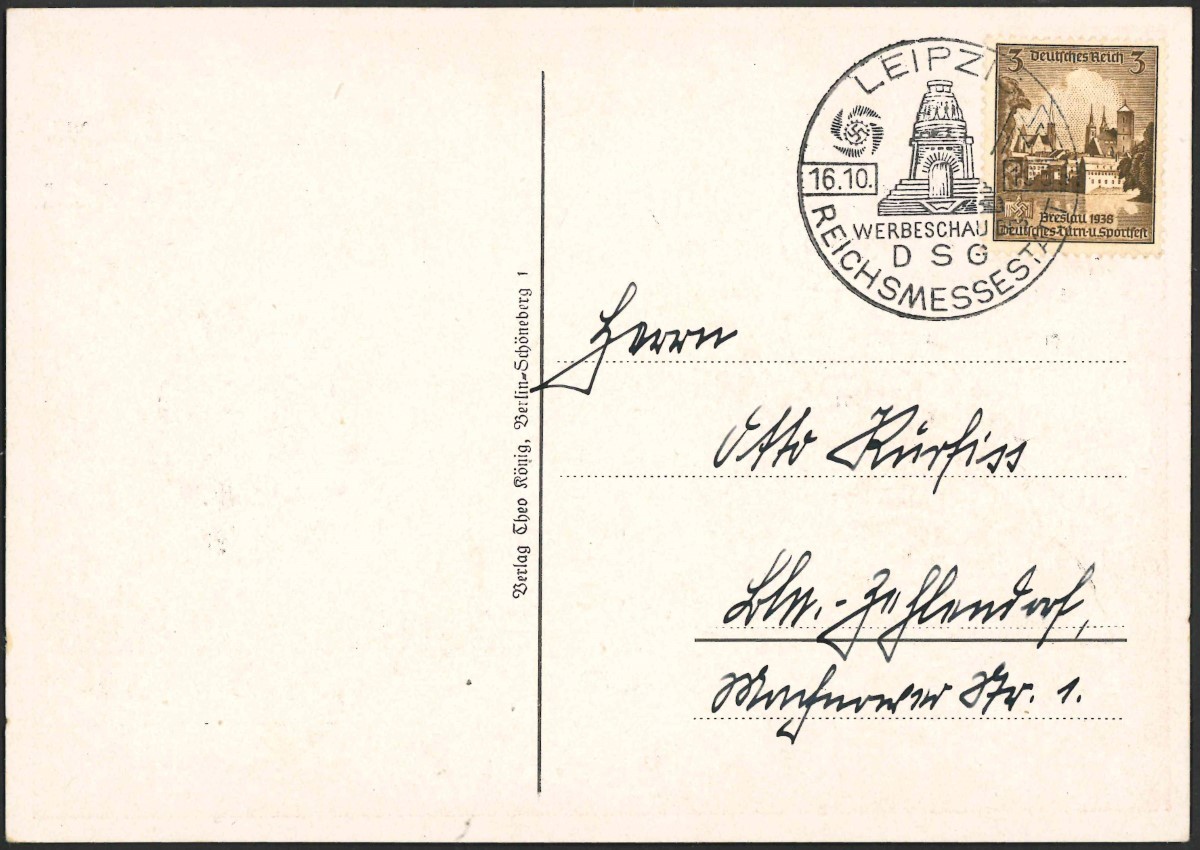
VERLAG THEO KÖNIG, BERLIN
Issued by Verlag Theo König of Berlin to commemorate the annexation.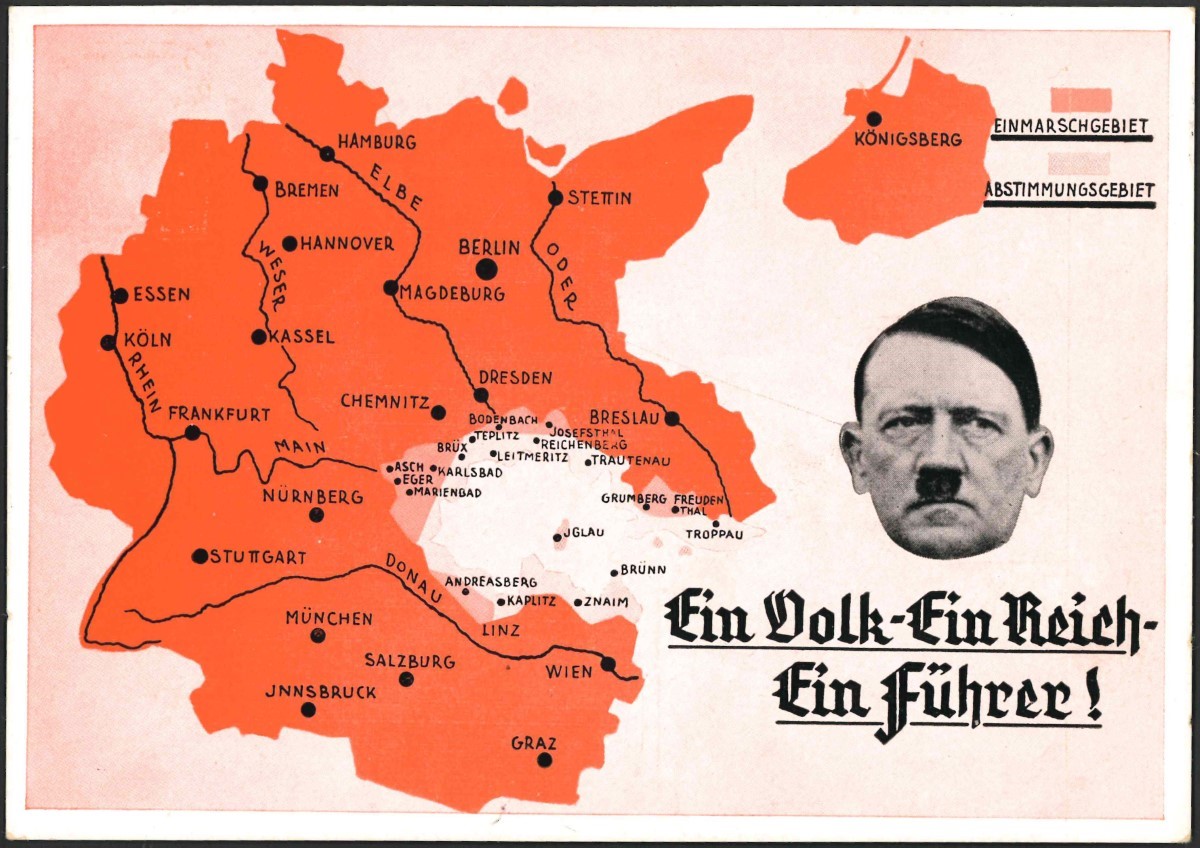
The postcard below commemorates the "liberation" of Haida.
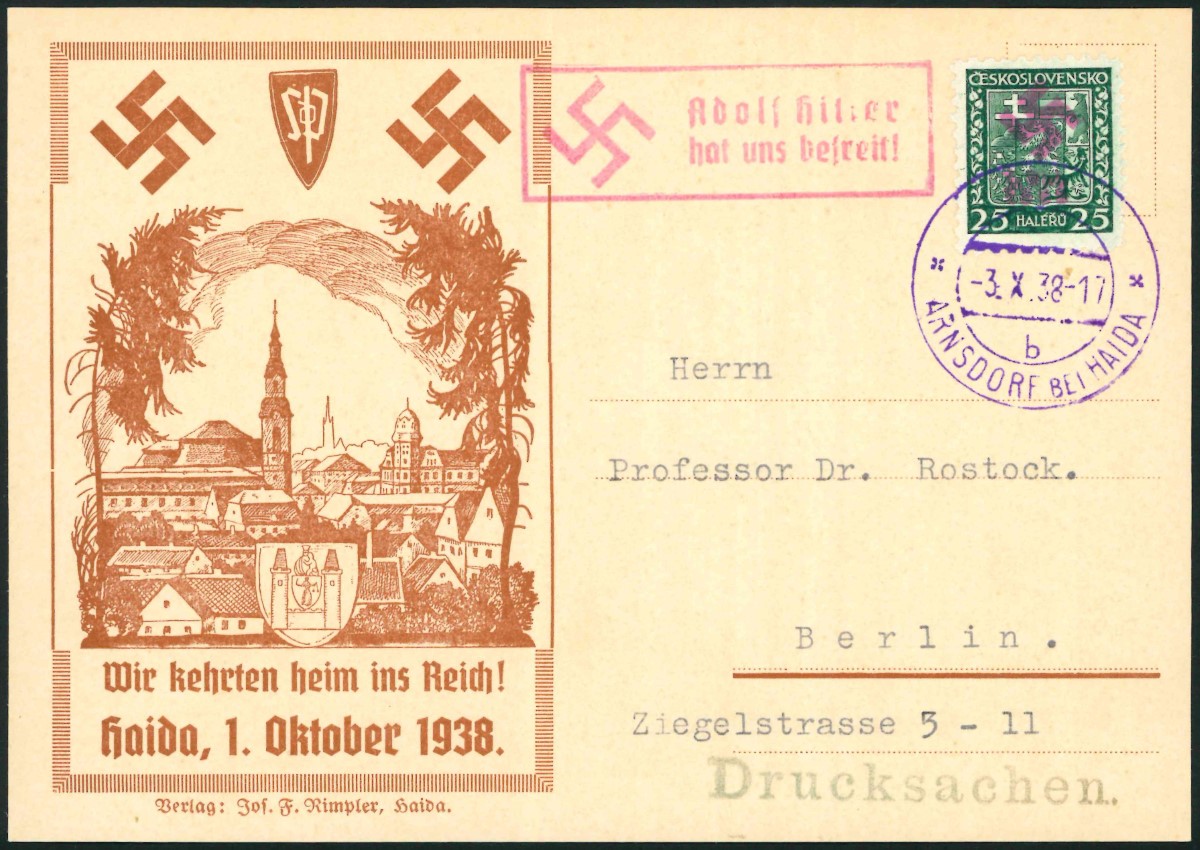
This one's a Sudetenland "liberation" propaganda card for Haida (today Nový Bor, Czech Republic), and unusually, it looks like it was sent to a specific, identifiable Nazi-era figure.
Front: A view of the Haida townscape (church tower, town hall, the local coat of arms) framed by two large swastikas and a small crest, captioned "Wir kehrten heim ins Reich! Haida, 1. Oktober 1938" ("We came home to the Reich! Haida, 1 October 1938"), the date Sudeten German towns like Haida/Nový Bor were occupied following the Munich Agreement. Published by Jos. F. Rimpler, Haida, a local printer. A pink boxed cachet with another swastika reads "Adolf Hitler hat uns befreit!" ("Adolf Hitler has freed us!"), standard Nazi framing of the annexation as "liberation."
Postal use: What's notable here is the stamp is still a genuine Czechoslovak 25-haléř issue, Czechoslovak postage remained valid for a short transitional window even after German troops moved in, before Reich stamps took over. It's cancelled with a purple special postmark from "Arnsdorf bei Haida," dated 3.X.38 at 17:00 (3rd Oct 1938), so this card was mailed just two days after the "Heimkehr" date printed on the front, a fresh, transitional-period propaganda mailing rather than a later souvenir.
Recipient: Addressed to "Herrn Professor Dr. Rostock, Berlin, Ziegelstrasse 5-11" and marked "Drucksachen" (printed matter, i.e., bulk/circular postage rate). Ziegelstrasse 5–11 was the address of the Charité's surgical university clinic in Berlin, and Paul Rostock, a Berlin surgeon who joined the NSDAP in 1937 and later became a defendant at the Nuremberg Doctors' Trial for his role overseeing Nazi human-experimentation programs, was on staff there. The address match makes it plausible (though not certain from the card alone) that this was sent to him, likely as one of many identical propaganda mailings circulated to professionals and officials in the Reich.
LIBERATION OF THE SUDETENLAND
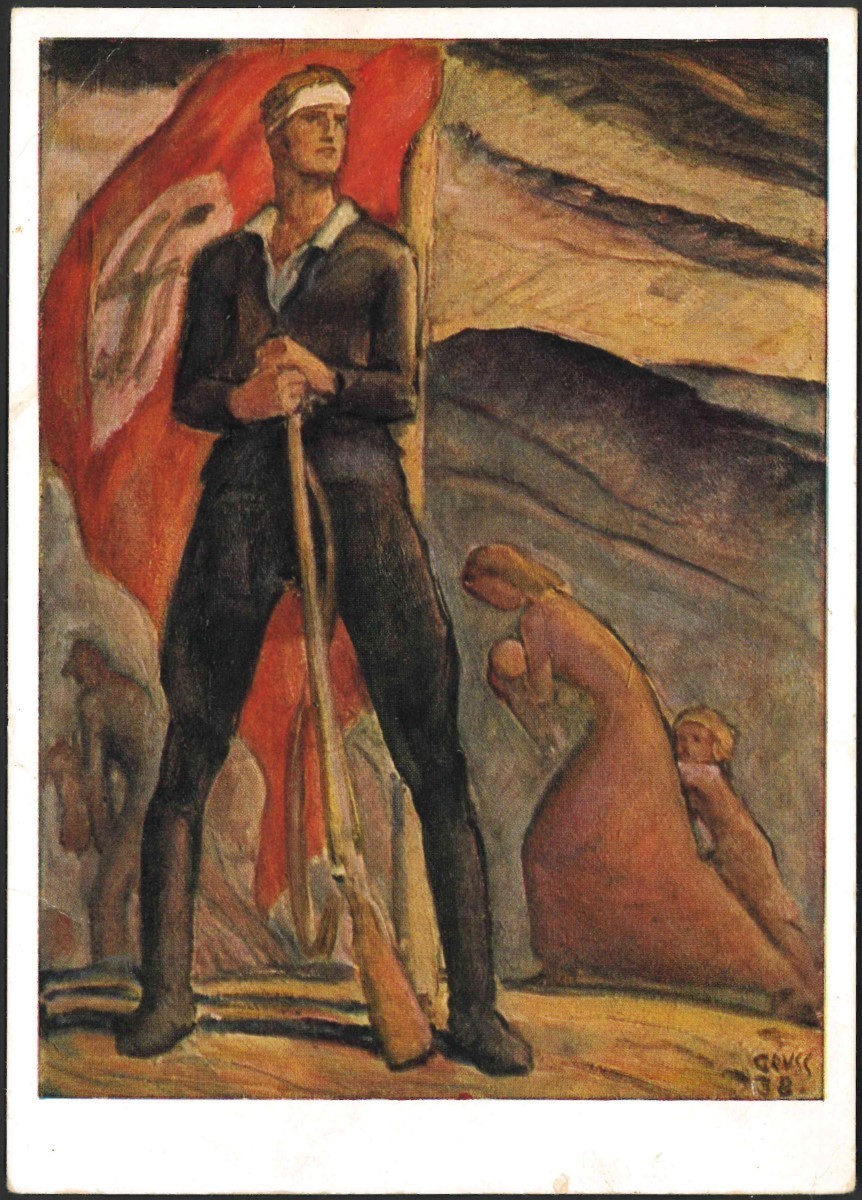
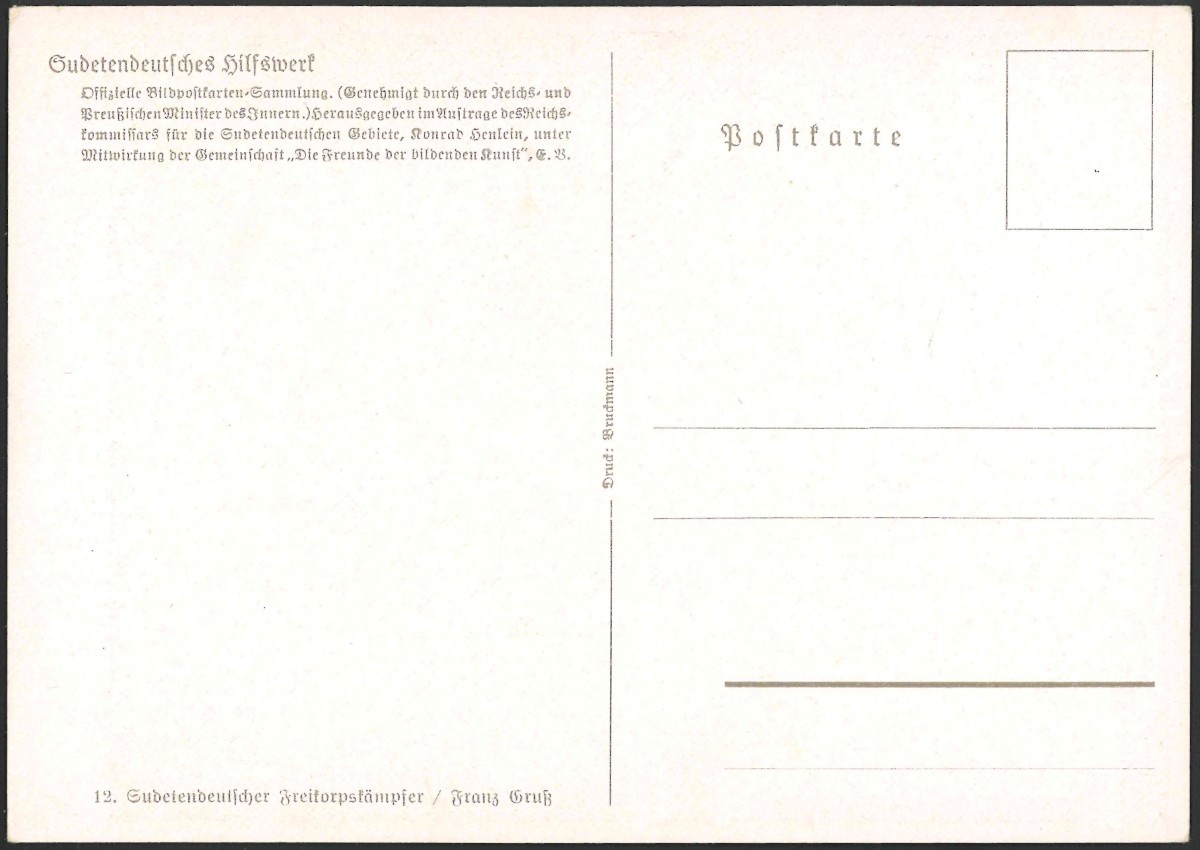
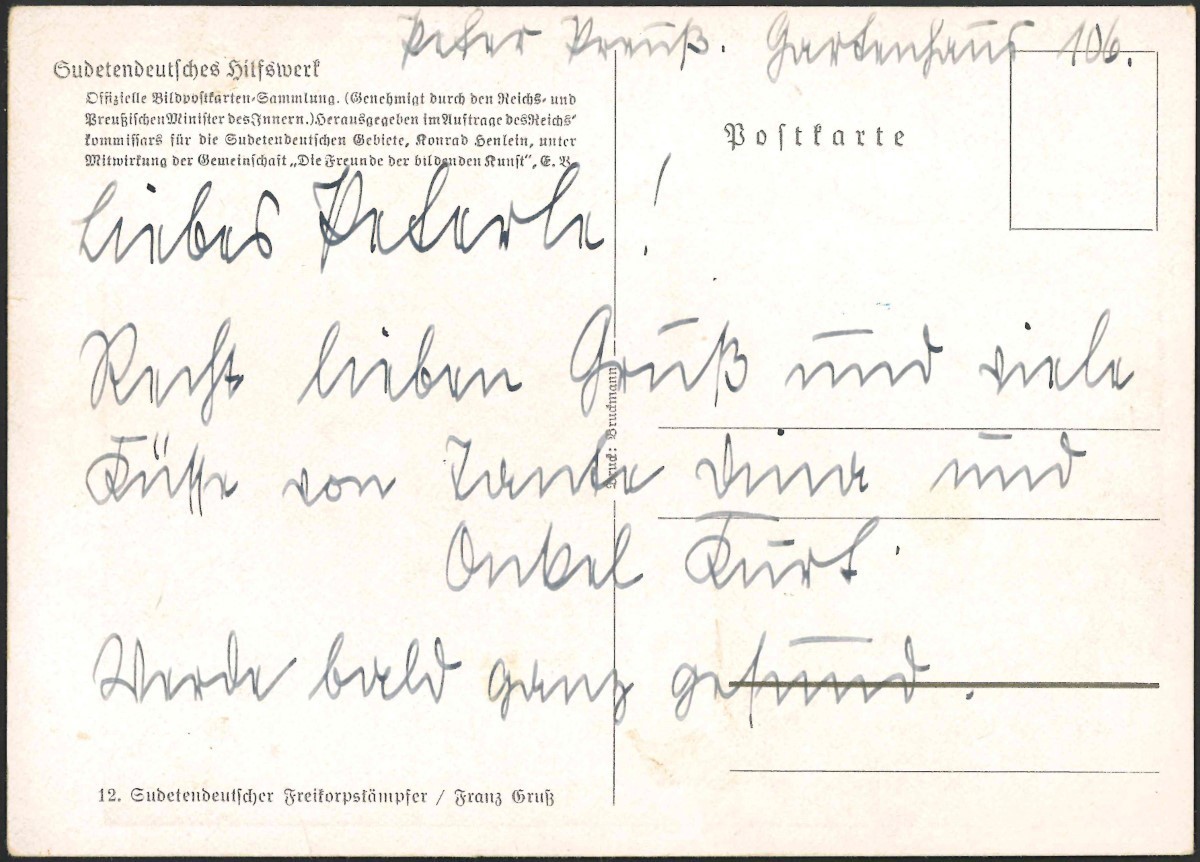
This propaganda postcard was published by Bruckmann from a painting by Franz Gruss to commemorate the return of the Sudetenland. The image is of a Sudeten German Freikorps soldier standing and protecting civilians with the Swastika flag behind him. The inscription on the reverse indicates the card was used to raise funds for the Sudeten German Winterhilfwerk organisation.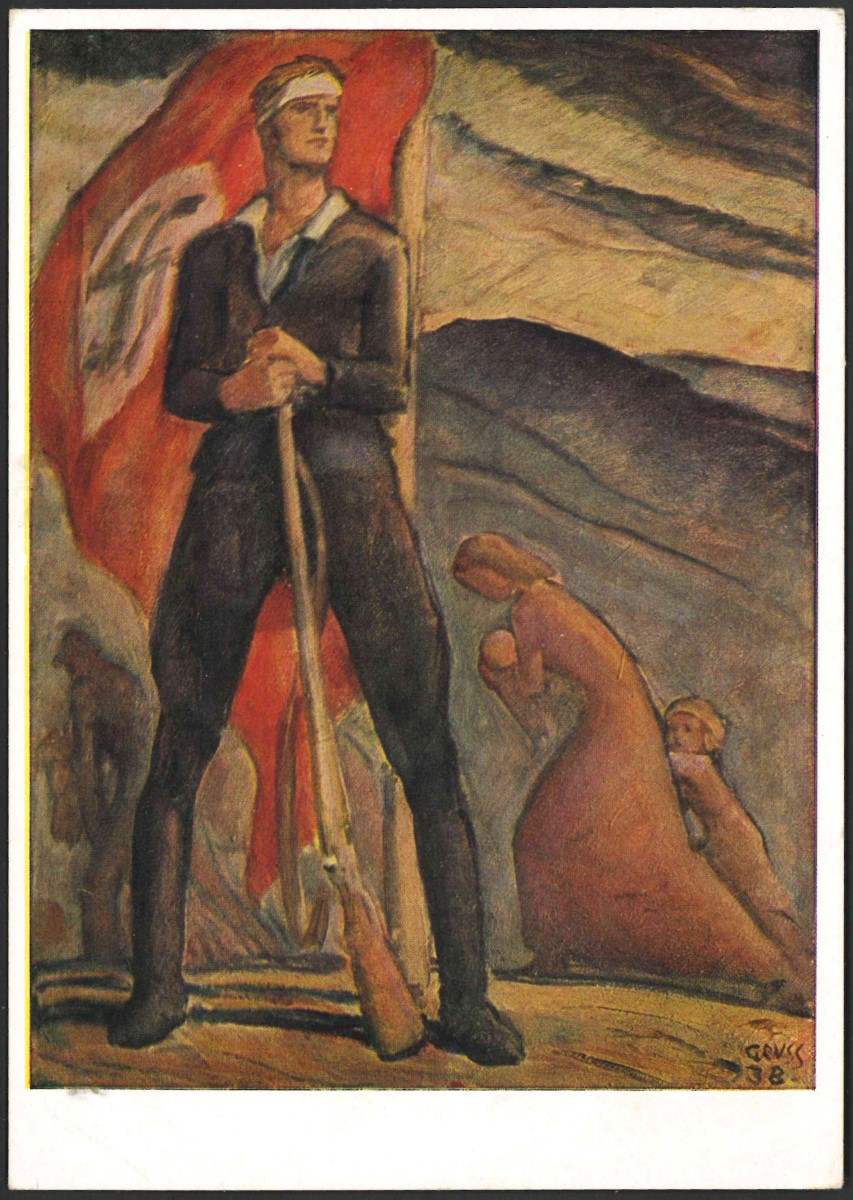
VERLAG CAMILLO SCHNEIDER, ASCH
The following three cards were published by Verlag Camillo Schneider of Asch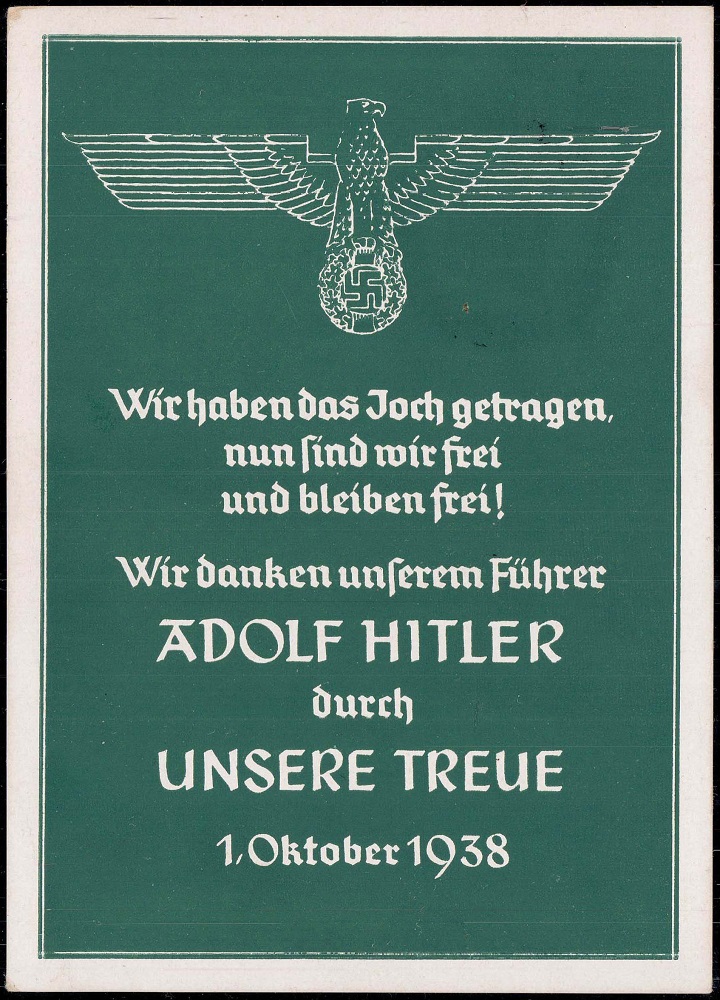
VERLAG JOHANN KÜNSTNER
The following card was published by Verlag Johann Künstner, Berlin and is another Sudetenland-annexation propaganda postcard, this one for Böhmisch Leipa (today Česká Lípa, Czech Republic).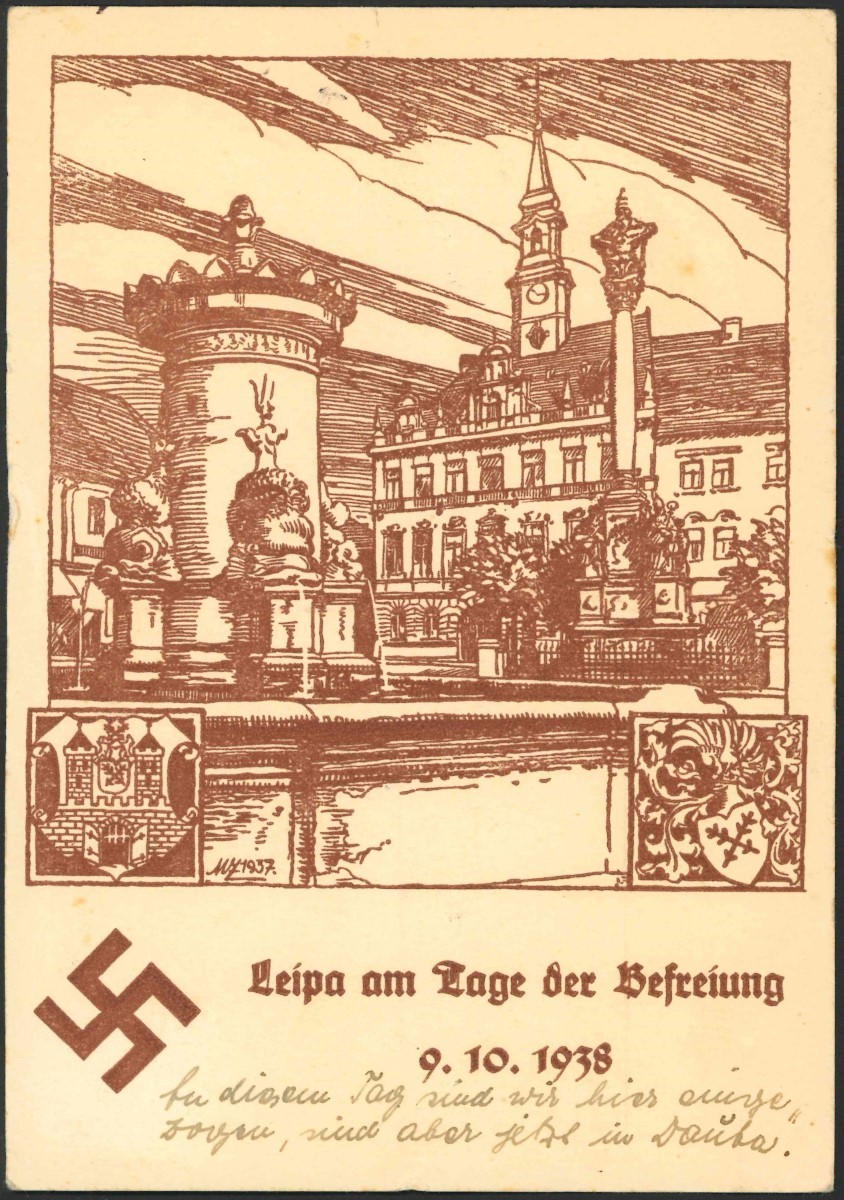
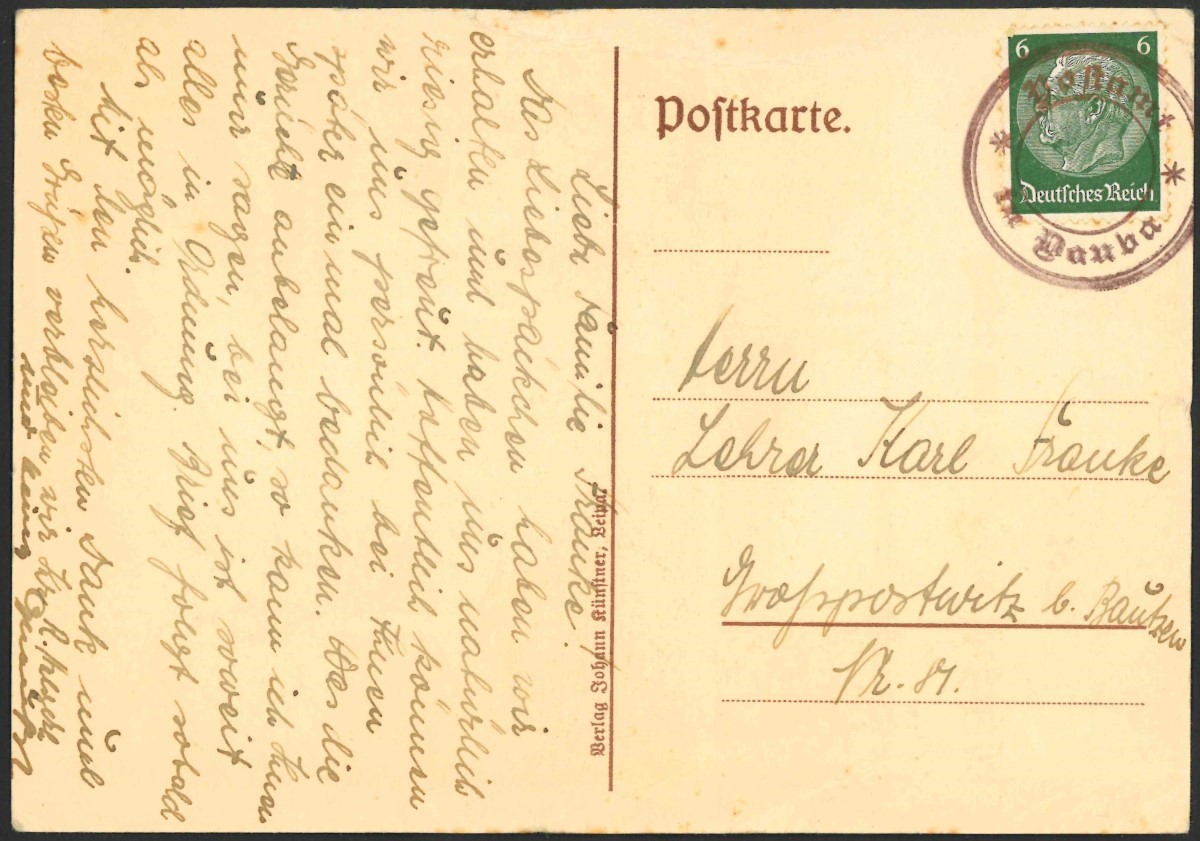
Front: A pen-drawing of the Leipa town square; plague/fountain column, town hall, church tower, and the town's coat of arms in the corners, signed "M.K. 1937" by the artist. Below it, alongside a printed swastika, the caption reads "Leipa am Tage der Befreiung, 9.10.1938" ("Leipa on the day of liberation, 9 October 1938") — the date German troops marched into Böhmisch Leipa during the Sudetenland occupation. The pencilled note adds something like "An diesem Tag sind wir hier eingezogen, sind aber jetzt in Rumburg" ("On this day we marched in here, but are now in Rumburg"), likely written by a soldier or official who'd since moved on to Rumburg (Rumburk), another Sudeten town.
Back: Published by "Verlag Johann Künstner, Leipa," a local Böhmisch Leipa printer/publisher active there since the 1890s. It's franked with a 6-pfennig green Hindenburg definitive (Deutsches Reich) and cancelled at Dauba (Dubá), a small town near Leipa, showing German Reich postage already in use in the newly annexed area. Addressed to a schoolteacher, Karl Franke, in Großpostwitz near Bautzen, Saxony.
VERLAG RUDOLF FLEISCHER
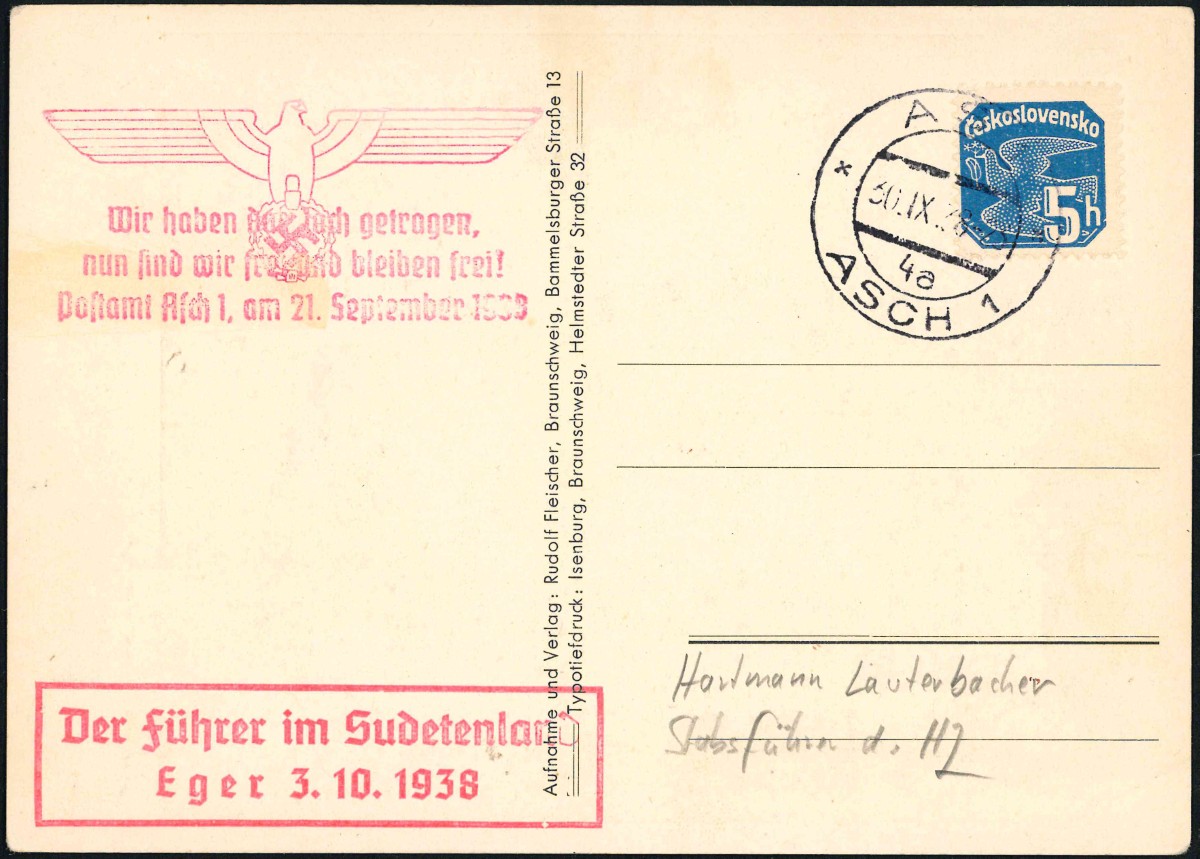
The following card features an image of Baldur von Schirach and two commemorative slogan cancellations. This card is priced around €30.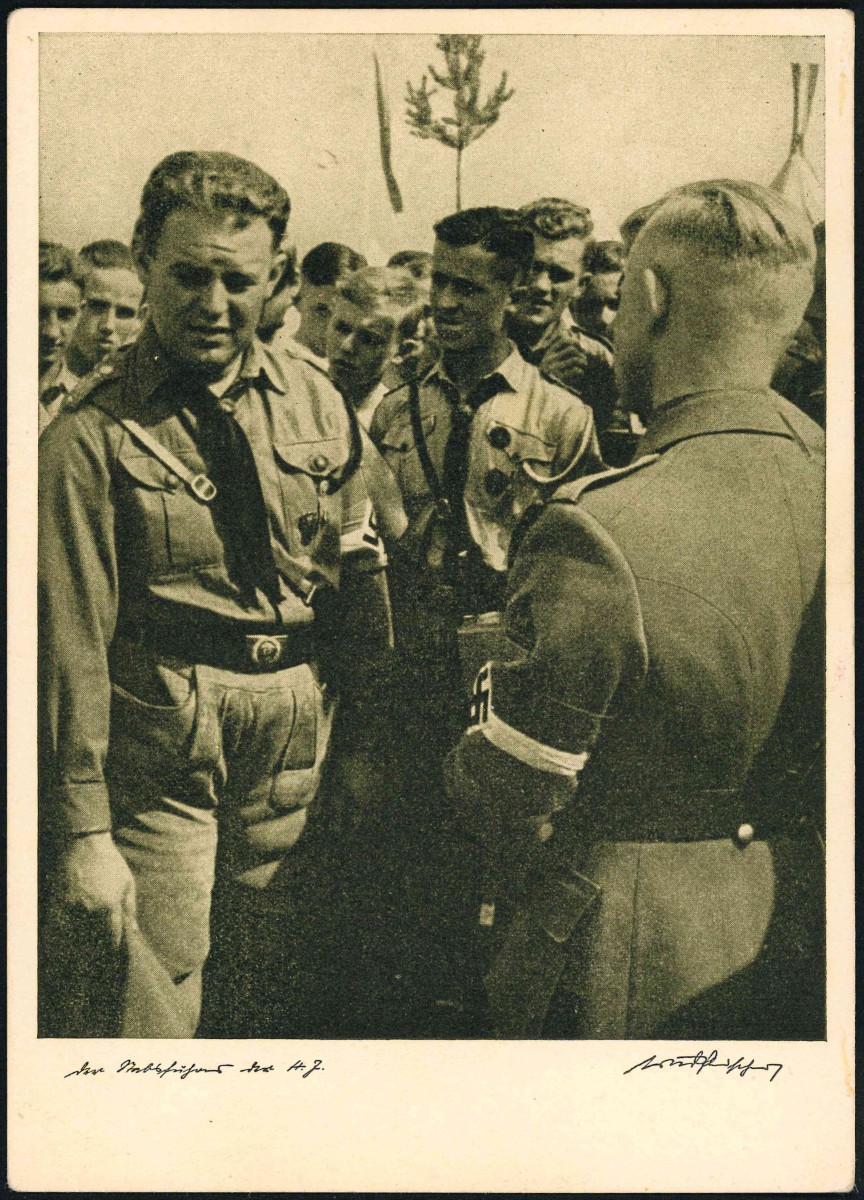
Front: A press photo captioned "Der Reichsjugendführer der H.J." (The Reich Youth Leader of the Hitler Youth; Baldur von Schirach's title at the time), shown talking with Hitler Youth members. Published by Rudolf Fleischer, Braunschweig (photo/publisher credit and printer "Isenburg, Braunschweig" appear on the back).
Back: Two commemorative markings tie it to specific events:
A red eagle cachet reading "Wir haben das Joch getragen, nun sind wir frei und bleiben frei! Postamt Asch 1, am 21. September 1938" ("We carried the yoke, now we are free and remain free! Post office Asch 1, 21 September 1938"), is a propaganda cancel from Asch (now Aš, Czech Republic) celebrating the town's "liberation" from Czechoslovak rule as the Sudeten crisis unfolded.
A boxed red cachet: "Der Führer im Sudetenland | Eger 3.10.1938," commemorates Hitler's visit to Eger (now Cheb) on 3rd Oct 1938, days after the Munich Agreement formalized the German annexation.
It bears a genuine 5-haléř Czechoslovak stamp, cancelled at Asch 1 on 30th Sep 1938, the last day before Czechoslovak postal service there ended and the area was absorbed into Germany.
STERNBERG CHARITY CARDS
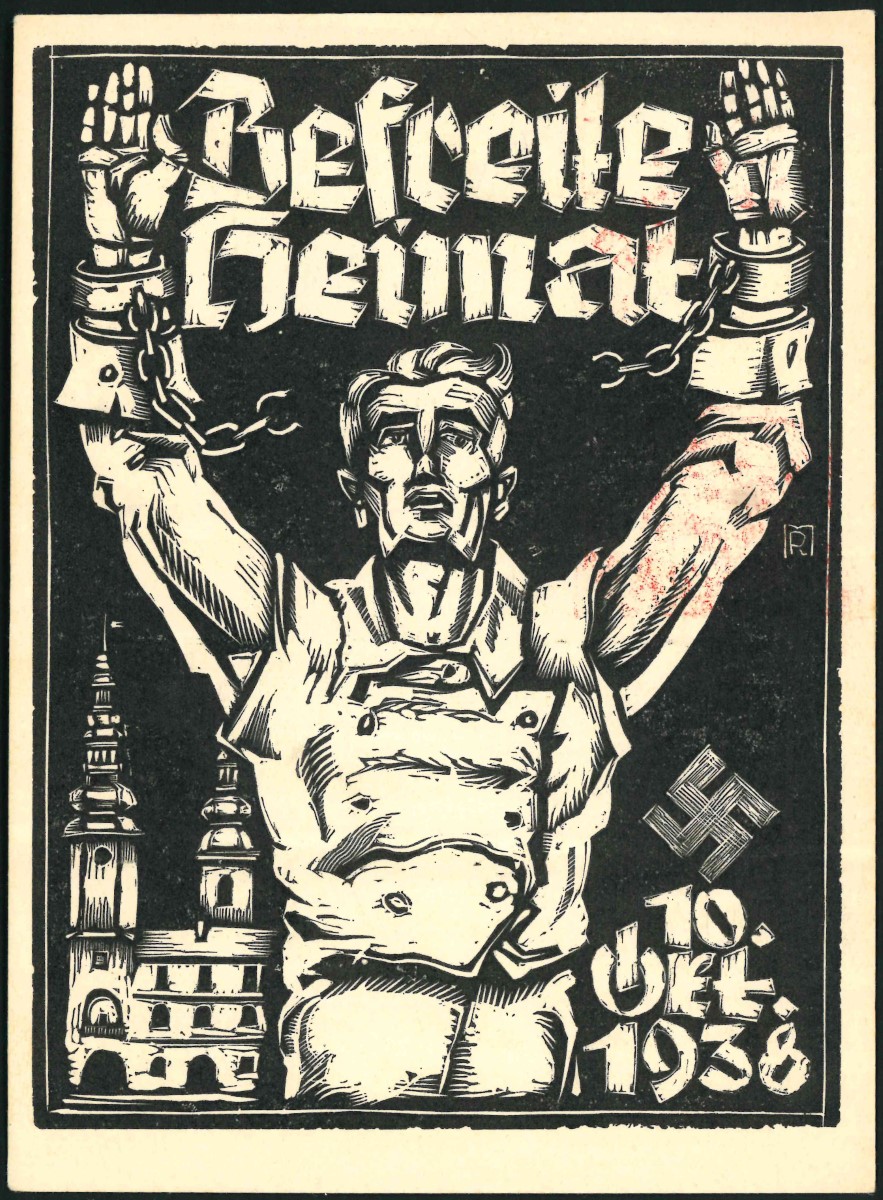
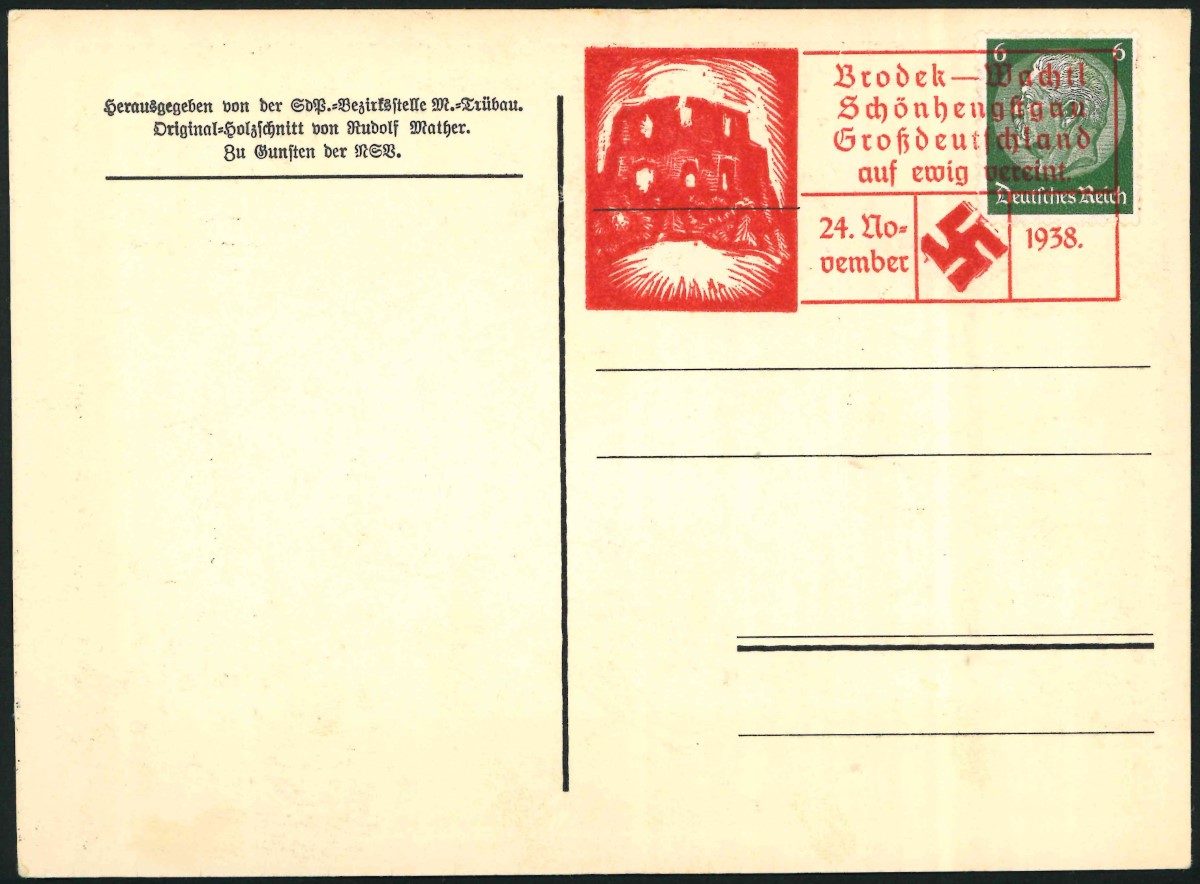
There were two charity cards published in the city of Sternberg commemorating the 'freeing' of the Sudetenland. One of the cards is shown below. The other card has the text "Befreite Heimat 2. Okt. | 1938" at the top left-hand side and a large swastika to the right. The bottom of the card shows the heads of a male and female with chains around their necks.